Information Details
Youda insulation material manufacturer regularly updates insulation product information and company news to keep you informed of the latest developments and industry trends.
Bakelite Sheet for Transformers: Benefits and Applications
Market Dynamics: Bakelite Sheet Supply Chain Under Pressure
Demand for Bakelite sheet in electrical insulation applications has intensified through 2025, driven by global investments in grid resilience and dry-type transformer deployment. This surge coincides with tightening availability of key phenolic resin precursors—particularly in Northeast Asia, where new VOC emission controls have curtailed formaldehyde production capacity since early 2025.
As a result, lead times for standard-grade Bakelite sheet have extended from typical 4–6 weeks to 10–14 weeks across major North American and European distributors. Concurrently, multiple tier-1 transformer manufacturers have issued engineering change notices (ECNs) urging design teams to lock in material allocations before Q1 2026, citing concerns over specification drift if substitute laminates are forced into critical insulation roles.
Procurement and design engineers are advised to conduct immediate supply chain audits and qualify alternative lot sources while maintaining strict adherence to dielectric and thermal performance criteria.

Navigating Material Scarcity Through Technical Mastery
As the transformer industry grapples with supply volatility in traditional insulating materials, the strategic value of deeply understanding legacy yet irreplaceable components like Bakelite sheet becomes paramount. Rather than treating it as a commodity to be sourced reactively, forward-looking engineers are re-examining its intrinsic properties—not just for compliance, but for performance optimization under evolving electrical and thermal stress conditions. This article delves into a technically nuanced perspective: how the molecular architecture and processing history of Bakelite sheet directly influence its dielectric resilience in high-voltage transformer environments, particularly under partial discharge (PD) exposure—a critical failure mode often overlooked in generic spec sheets.
The Enduring Relevance of Bakelite in Modern Transformer Design
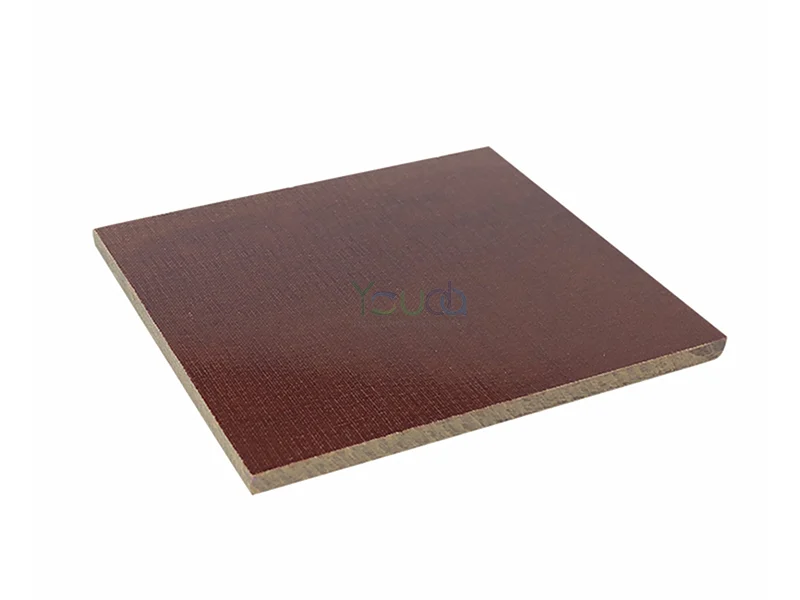
Despite the emergence of advanced composites and thermoplastics, Bakelite sheet—a phenolic resin laminated with cellulose or fabric reinforcement—remains entrenched in medium- and high-voltage power transformers. Its persistence isn’t merely due to inertia; it reflects unmatched synergies between cost, machinability, and electrical stability. Unlike many modern polymers that degrade unpredictably under sustained corona activity, properly cured Bakelite sheet exhibits a self-limiting carbonization behavior that contains localized discharges without catastrophic propagation.
This characteristic is rooted in its thermoset nature. Once polymerized, the three-dimensional cross-linked network of phenol-formaldehyde resin cannot melt or flow, even at temperatures exceeding 150°C. In transformer cores and coil supports, where mechanical rigidity must coexist with arc resistance, this structural permanence is non-negotiable.
Partial Discharge Resistance: The Hidden Advantage of Bakelite Sheet
Among insulation materials, Bakelite sheet occupies a unique niche in its response to partial discharge—a phenomenon where localized electrical breakdown occurs in gas-filled voids within or adjacent to solid insulation. Over time, PD erodes organic materials, creating conductive carbon tracks that eventually bridge electrodes and cause short circuits.
What sets Bakelite sheet apart is its “tracking-resistant” degradation profile. When subjected to PD stress, the phenolic matrix chars in a controlled manner, forming a non-conductive, glassy carbon layer that actually suppresses further ionization. This contrasts sharply with epoxy-based laminates or polyesters, which often produce conductive soot that accelerates failure.
Laboratory studies simulating IEC 60270 PD conditions show that high-grade Bakelite sheet (e.g., XXPE or XXXPC grades per NEMA LI 1-1998) can endure over 10,000 hours of continuous PD exposure at field strengths up to 3 kV/mm without significant loss of insulation resistance. This endurance translates directly into extended transformer service life—especially in dry-type units deployed in humid or polluted environments where moisture ingress exacerbates discharge activity.
Thermal Stability and Dimensional Integrity Under Load Cycling
Transformers undergo repeated thermal cycling during operation, expanding and contracting internal components. Mismatched coefficients of thermal expansion (CTE) between insulation and copper windings can induce microcracks, creating pathways for moisture and contaminants.
Bakelite sheet, particularly when reinforced with woven cotton or synthetic fabrics, demonstrates a CTE closely aligned with enameled copper wire (typically 12–18 ppm/°C). This compatibility minimizes interfacial stress during load fluctuations. Moreover, its glass transition temperature (Tg) exceeds 130°C, well above standard operating limits for most distribution transformers (typically <110°C hotspot temperature).
Critically, unlike thermoplastic alternatives that soften near Tg, Bakelite sheet retains compressive strength even at elevated temperatures. In clamping structures or phase barriers, this ensures consistent mechanical preload on windings—preventing vibration-induced abrasion and maintaining dielectric clearance over decades of service.
Machinability and Custom Fabrication: A Strategic Procurement Lever
In an era of supply chain fragility, the ease with which Bakelite sheet can be locally machined offers a compelling risk-mitigation advantage. Standard grades are readily cut, drilled, and milled using conventional workshop tools—no specialized CNC programming or exotic tooling required. This enables rapid prototyping of custom spacers, terminal boards, or core shims without reliance on long-lead imported subassemblies.
For maintenance teams servicing aging transformers, this means on-site fabrication of replacement parts using stock Bakelite sheet inventory—bypassing months-long waits for OEM-specific components. Furthermore, because the material’s electrical properties are isotropic (uniform in all directions), orientation during cutting doesn’t compromise performance, simplifying design validation.
Environmental and Regulatory Considerations in Material Selection
While phenolic resins are derived from petrochemical sources, Bakelite sheet presents a paradoxically sustainable profile in transformer applications. Its extreme longevity—many units installed in the 1970s remain operational—reduces lifecycle replacement frequency. Additionally, end-of-life Bakelite sheet can be safely incinerated in controlled facilities, yielding minimal toxic emissions compared to halogenated flame-retardant alternatives.
From a compliance standpoint, modern Bakelite sheet formulations meet RoHS and REACH requirements, with low levels of residual formaldehyde (<50 ppm in cured state). Crucially, it contains no brominated compounds, avoiding the regulatory scrutiny now facing many brominated epoxy systems in the EU and California.
Emerging Applications: Beyond Traditional Core Insulation
The conversation around Bakelite sheet often centers on legacy roles, but innovative engineers are repurposing its properties for next-generation challenges. In compact, high-frequency transformers used in EV chargers and solar inverters, Bakelite sheet serves as EMI shielding substrates due to its moderate volume resistivity (10^10–10^12 Ω·cm)—sufficient to dissipate static while blocking radiated noise.
Similarly, in hybrid dry-oil transformer designs emerging in data center power architectures, Bakelite sheet acts as a hermetic barrier between oil-immersed windings and air-cooled heat exchangers, leveraging its low moisture absorption (<1% after 24-hour immersion) to prevent cross-contamination.
Strategic Implications for Procurement and Design Validation
Given current market pressures, merely specifying “Bakelite sheet” is insufficient. Not all grades perform equally under PD stress or thermal cycling. Engineers must validate:
- Resin cure density (via DMA or solvent extraction tests)
- Reinforcement type (cotton vs. synthetic affects moisture uptake)
- Post-cure annealing protocols (reduces internal stresses)
Collaborating with suppliers who provide batch-specific test reports—not just generic datasheets—is essential. In fact, some leading manufacturers now offer “PD-optimized” Bakelite sheet variants with enhanced filler dispersion to minimize void content below 0.5%, directly targeting the root cause of discharge initiation.
Conclusion: Depth of Knowledge as a Competitive Shield
The tightening supply of Bakelite sheet is not merely a logistical hurdle—it’s a catalyst for deeper technical engagement. Organizations that treat this material as a passive component will face escalating costs and quality compromises. Conversely, those who leverage its unique electro-thermal behavior—particularly its innate resistance to partial discharge degradation—can design more resilient transformers, extend asset life, and even unlock new applications.
In volatile markets, expertise becomes the ultimate buffer. Understanding not just what Bakelite sheet does, but how and why it performs under extreme conditions, empowers engineers to make procurement decisions that are both economically sound and technically defensible. As global electrification accelerates, such depth of insight won’t just be valuable—it will be indispensable.
★★★ Recommended Reading:
Bakelite Sheet in Automotive Industry: Why It’s Essential
If you need detailed information about related products, you can let me know via online chat, email, WhatsApp, or any other method, and we will contact you on the same day to solve your problem.