Information Details
Youda insulation material manufacturer regularly updates insulation product information and company news to keep you informed of the latest developments and industry trends.
Epoxy Sheet for Thermal Management: A Material Analysis
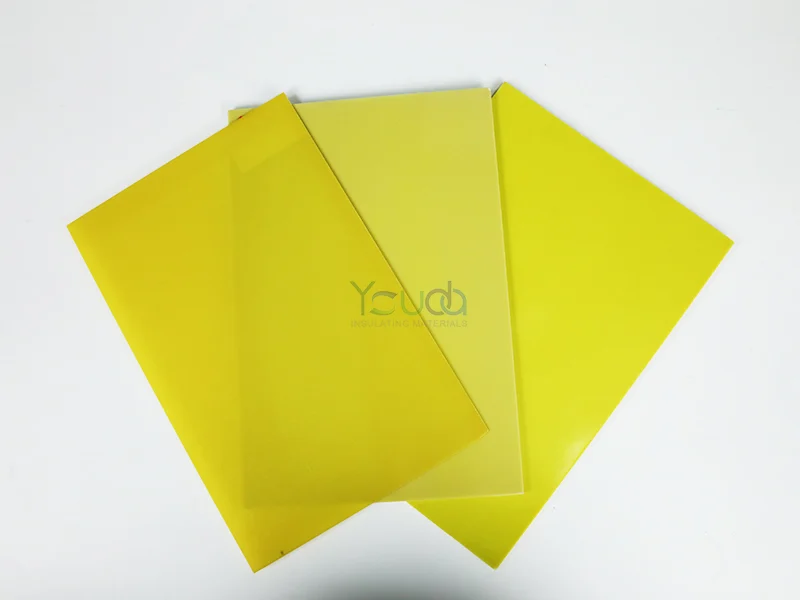
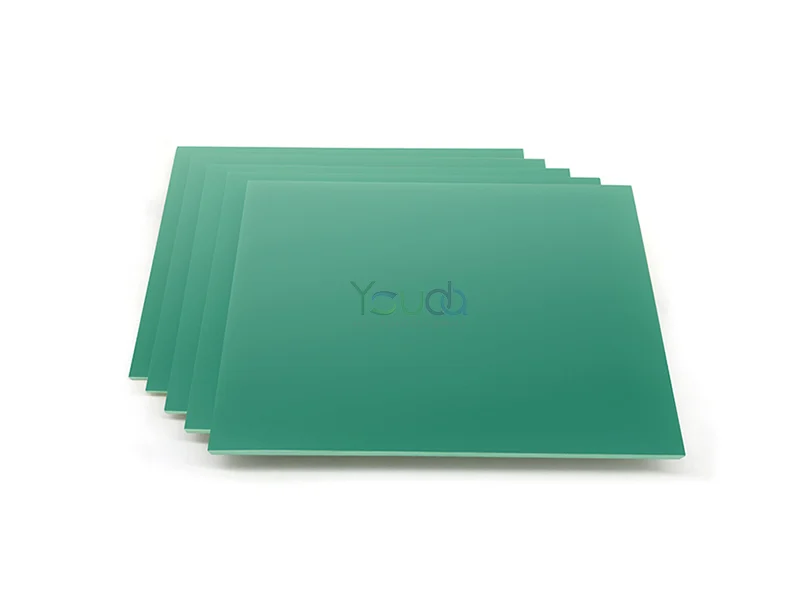
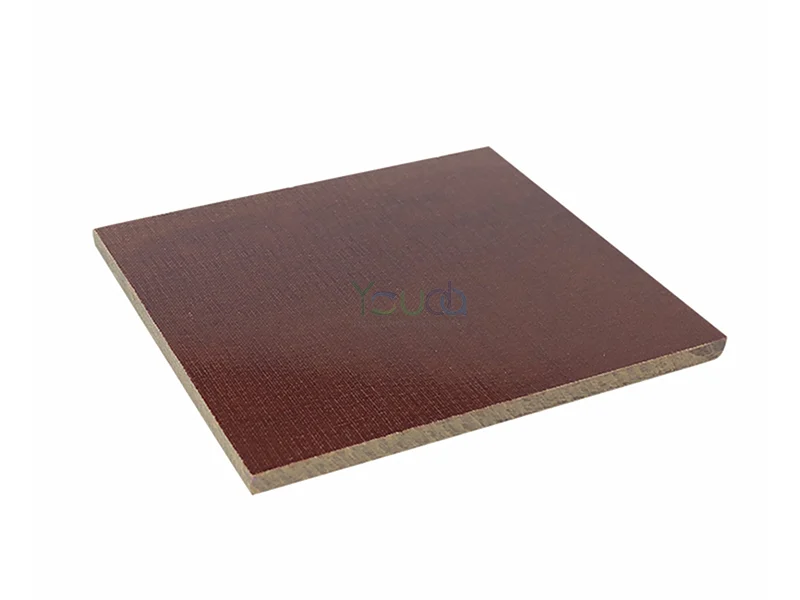
In modern electronics, efficient thermal management is no longer a secondary design concern—it is a core requirement. As devices become smaller, faster, and more powerful, the challenge of dissipating heat without compromising electrical insulation has driven engineers toward specialized materials. Among these materials, the Epoxy Sheet has emerged as a reliable and versatile solution. Combining mechanical strength, dielectric stability, and thermal resistance, epoxy-based laminates serve as the backbone for numerous thermal control applications in industrial, electrical, and electronic systems.
This article explores the material properties, performance characteristics, and design relevance of Epoxy Sheet in thermal management, providing an in-depth look at how its unique structure enables high reliability in demanding thermal environments.
The Role of Epoxy Sheet in Thermal Systems
Thermal management in electronic systems involves controlling the flow of heat to maintain operational efficiency and protect sensitive components. While metals and ceramics are often praised for their thermal conductivity, they frequently lack the electrical insulation and process versatility that epoxy composites offer.
An Epoxy Sheet provides an optimized balance—adequate heat dissipation with excellent dielectric insulation. This balance is essential in applications such as transformers, printed circuit boards (PCBs), electric vehicle power modules, and high-frequency communication systems.
The core of the epoxy sheet’s performance lies in its composite design: a thermosetting epoxy resin reinforced with glass fiber or other filler materials. This composition grants it not only high mechanical stability but also consistent thermal endurance across varying environmental conditions.
Material Composition and Structure
The performance of an Epoxy Sheet in thermal management applications depends heavily on its molecular and structural configuration. The base epoxy resin matrix is crosslinked during the curing process, forming a three-dimensional polymer network. This network provides exceptional dimensional stability and heat resistance.
The reinforcement material—commonly woven fiberglass—acts as the structural backbone, ensuring mechanical rigidity and minimizing deformation under thermal load. Fillers or additives may be introduced to tailor specific properties such as thermal conductivity, flame retardancy, or chemical resistance.
The combination of these components results in a material that is lightweight yet robust, insulating yet thermally stable—a rare combination in engineering materials.
Thermal Conductivity: The Defining Characteristic
Although traditional epoxy resins are known for their low thermal conductivity (typically between 0.2 and 0.4 W/m·K), advances in material engineering have enabled the development of Epoxy Sheets with significantly improved thermal transfer capabilities. By integrating thermally conductive fillers such as aluminum oxide, boron nitride, or graphite, manufacturers can produce epoxy laminates with conductivity values exceeding 1.5 W/m·K without compromising insulation.
This improvement is particularly vital for next-generation power electronics, where high current densities generate localized heat zones. An epoxy sheet with engineered thermal pathways allows heat to spread more evenly, reducing hotspots and improving the overall reliability of the electronic system.
Moreover, these thermally enhanced epoxy sheets maintain consistent performance across temperature cycles, preventing microcracks or delamination that could otherwise occur with metallic or ceramic substrates.
Dielectric Strength and Electrical Stability
While thermal performance is critical, Epoxy Sheet retains its reputation primarily for its outstanding dielectric properties. With dielectric strengths typically ranging from 10 to 20 kV/mm, it serves as an excellent insulator in both low- and high-voltage systems.
What sets epoxy sheets apart is their ability to maintain electrical stability even under thermal stress. The molecular rigidity of the crosslinked resin prevents ionic migration and dielectric breakdown—problems commonly encountered in lower-grade insulating materials.
This stability ensures that an epoxy sheet can simultaneously serve as a heat spreader and an electrical barrier, making it indispensable in multilayer assemblies and power module insulation designs.
Mechanical Integrity Under Thermal Load
Thermal management materials must endure more than just heat—they must tolerate continuous mechanical and thermal cycling. Epoxy sheets exhibit high compressive strength and minimal thermal expansion, characteristics that preserve structural integrity in environments with fluctuating temperatures.
The coefficient of thermal expansion (CTE) of an epoxy sheet can be customized through filler selection and resin formulation, enabling compatibility with adjacent materials such as copper, aluminum, or ceramic substrates. This compatibility minimizes interfacial stress, a common cause of delamination and failure in hybrid systems.
Additionally, epoxy sheets demonstrate exceptional fatigue resistance. Unlike thermoplastics, which can soften under heat, thermoset epoxy retains its rigidity, providing consistent clamping pressure and dimensional accuracy in mounting applications.
Moisture and Chemical Resistance
Thermal performance is often compromised by environmental factors such as humidity or chemical exposure. Epoxy-based laminates exhibit superior resistance to moisture absorption, preserving both dielectric strength and mechanical stability in high-humidity conditions.
This property makes Epoxy Sheet particularly useful in outdoor power equipment, renewable energy converters, and aerospace electronics, where exposure to varying environmental conditions is inevitable.
Furthermore, the chemical resistance of epoxy resins ensures that the sheet maintains integrity against oils, coolants, and reactive gases—substances commonly present in industrial settings. This level of environmental endurance enhances the overall reliability of devices employing epoxy insulation.
Design Flexibility and Process Adaptability
Another critical advantage of the Epoxy Sheet lies in its fabrication versatility. It can be easily machined, punched, or laser-cut into complex geometries without compromising its structural or electrical properties. This adaptability simplifies integration into various design formats—from thin insulating barriers to multi-layer heat-dissipating laminates.
Epoxy sheets are also compatible with a wide range of lamination and bonding processes. They adhere effectively to metals and ceramics, supporting hybrid designs where thermal and electrical performance must coexist.
In high-volume manufacturing, epoxy sheets offer a consistent and repeatable performance profile, which is crucial for process control and product reliability.
Thermal Stability in Long-Term Applications
For materials used in continuous thermal management, longevity under high temperature is essential. Epoxy sheets generally exhibit glass transition temperatures (Tg) between 120°C and 180°C, depending on formulation. Beyond this threshold, the material remains dimensionally stable and electrically sound, even after prolonged exposure.
Epoxy sheets designed for high-performance thermal management may include additional modifiers to extend Tg beyond 200°C, enabling use in extreme conditions such as power inverters, electric drives, and aerospace controls.
Long-term studies show that the degradation rate of epoxy sheets under thermal load is considerably slower than that of polyester or phenolic alternatives. This durability contributes to reduced maintenance intervals and improved lifecycle performance for thermal management systems.
Sustainability and Future Material Trends
As industries shift toward sustainability, the Epoxy Sheet is also undergoing transformation. Modern epoxy systems are being reformulated to include bio-based resins and recyclable fillers, reducing environmental impact without sacrificing performance.
Researchers are exploring nanocomposite technologies—embedding carbon nanotubes or graphene flakes within the epoxy matrix—to further enhance thermal conductivity while maintaining insulation and strength. Such innovations suggest that the epoxy sheet will remain a cornerstone material in the next generation of energy-efficient thermal solutions.
Furthermore, its long lifespan and recyclability potential contribute to the circular economy, aligning with the sustainability goals of advanced manufacturing and electronics sectors.
Applications That Benefit Most from Epoxy Sheets
The versatility of epoxy sheets allows them to serve across multiple sectors where thermal management and insulation intersect:
Power electronics: Base insulation for converters, inverters, and high-current modules.
Automotive systems: Thermal barriers in EV battery packs and control units.
Telecommunications: Structural insulation for high-frequency boards and amplifiers.
Industrial automation: Electrical isolation and heat dissipation in motor drives and sensors.
Aerospace and defense: Lightweight, stable insulators for avionic systems.
Each application takes advantage of the epoxy sheet’s balance between thermal stability, electrical insulation, and manufacturability—qualities that make it a reliable material for modern engineering challenges.
Conclusion
In the evolving landscape of thermal management materials, the Epoxy Sheet stands out for its balanced combination of heat resistance, dielectric strength, and mechanical stability. Its adaptability to diverse manufacturing processes and its ability to perform consistently under mechanical and thermal stress make it indispensable in the design of reliable, high-performance electronic systems.
As innovations in filler technology and resin chemistry continue, epoxy sheets are poised to deliver even higher levels of thermal efficiency and sustainability. For engineers and designers aiming to enhance system reliability and optimize heat control, the epoxy sheet remains not just a component—but a foundation of advanced thermal management.
★★★ Recommended Reading:
The Chemistry Behind Epoxy Sheet Manufacturing
If you need detailed information about related products, you can let me know via online chat, email, WhatsApp, or any other method, and we will contact you on the same day to solve your problem.