Information Details
Youda insulation material manufacturer regularly updates insulation product information and company news to keep you informed of the latest developments and industry trends.
Epoxy Sheet in Marine Engineering: Resistance Against Moisture
In the unforgiving world of marine engineering, materials are constantly tested by saltwater, humidity, and temperature fluctuations. Engineers face a relentless challenge—creating systems that endure prolonged exposure to moisture without structural or functional degradation. Among modern composite materials, Epoxy Sheet has emerged as a quiet powerhouse, offering exceptional resistance to moisture and corrosion while maintaining mechanical strength and dimensional stability. Its performance extends beyond surface-level protection; it represents a material innovation that directly impacts vessel longevity, maintenance efficiency, and design reliability.
Understanding the Role of Epoxy Sheet in Marine Systems
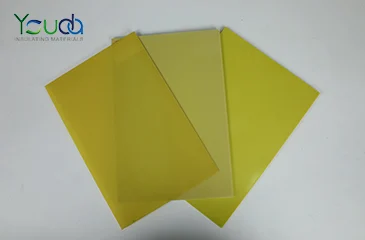
An Epoxy Sheet is a laminate material composed of epoxy resin reinforced with glass fiber or other high-performance substrates. This structure provides a balance between rigidity and flexibility, allowing it to resist deformation under load while maintaining consistent performance in wet or submerged conditions. Unlike metallic alternatives prone to oxidation, or thermoplastics that swell or warp in humidity, epoxy-based laminates retain their integrity even when constantly exposed to seawater.
In marine engineering, Epoxy Sheet is widely used in insulation panels, electronic housings, valve supports, and structural backings within ships, submarines, offshore platforms, and underwater devices. Its role extends from electrical isolation to mechanical reinforcement, where moisture resistance is critical to operational safety.
Moisture Resistance: The Core Advantage
The defining characteristic of Epoxy Sheet in marine applications lies in its superior resistance to moisture penetration. The molecular structure of cured epoxy resin creates a dense, cross-linked network that effectively blocks water molecules from diffusing through the material. Unlike porous laminates or untreated composites, epoxy-based systems exhibit an extremely low water absorption rate—often less than 0.1% under continuous exposure.
This low permeability means that an Epoxy Sheet not only avoids swelling or delamination but also prevents internal corrosion of embedded components. It acts as both a physical and chemical barrier, maintaining electrical insulation, dimensional accuracy, and bonding strength. For marine engineers, this translates to lower maintenance intervals, reduced equipment downtime, and a longer lifecycle for critical components.
Epoxy Sheet vs. Traditional Materials in Marine Environments
To fully appreciate the value of Epoxy Sheet, it is essential to compare it with conventional materials often used in marine engineering.
| Property | Stainless Steel | PVC | Phenolic Sheet | Epoxy Sheet |
|---|---|---|---|---|
| Moisture Resistance | Moderate (corrosion-prone over time) | High, but softens with temperature | Moderate | Excellent |
| Mechanical Strength | High | Low | Medium | High and stable |
| Thermal Stability | Good | Poor | Good | Excellent |
| Electrical Insulation | Poor | Excellent | Good | Excellent |
| Dimensional Stability in Humidity | Moderate | Weak | Fair | Outstanding |
While metals require coatings or cathodic protection systems to survive in seawater, Epoxy Sheets inherently resist degradation. They maintain form and function even under high hydrostatic pressure or salt crystallization cycles. Compared to phenolic laminates, epoxy-based sheets offer enhanced bonding uniformity and improved fatigue resistance—critical for vessels subjected to constant vibration and impact.
Microstructural Integrity Under Marine Conditions
At a microscopic level, the moisture resistance of Epoxy Sheet derives from the molecular cross-linking of epoxy polymers. During the curing process, the resin chains form a three-dimensional network that eliminates free volume, making it difficult for water molecules to penetrate. This dense structure also minimizes ionic transport—preventing corrosion of adjacent metals and ensuring long-term dielectric stability.
When used as a substrate or insulating layer in marine electrical systems, this property becomes crucial. Moisture-induced conductivity is one of the primary causes of short circuits and insulation failure on ships. By integrating Epoxy Sheet materials, engineers can significantly reduce the risk of dielectric breakdown, even in 100% humidity environments.
Thermal and Mechanical Synergy in Humid Conditions
Moisture resistance is often accompanied by thermal stability in Epoxy Sheet systems. The material retains its mechanical strength across a wide temperature range, from sub-zero waters to tropical climates. In offshore operations, where equipment undergoes thermal cycling due to diurnal temperature variations, epoxy laminates maintain dimensional consistency without microcracking or warping.
This stability ensures that load-bearing structures, insulation panels, and circuit housings do not loosen or deform over time—a common failure mode in less stable composites. Moreover, the epoxy matrix provides excellent adhesion to metals and ceramics, enabling hybrid assemblies with consistent performance under both mechanical and environmental stress.
The Science Behind Water Resistance
The hydrophobic nature of epoxy resin plays a vital role in minimizing water uptake. The chemical composition, rich in aromatic rings and ether linkages, inherently resists hydrogen bonding with water molecules. Furthermore, when reinforced with glass fiber, the interfacial adhesion between the epoxy matrix and fiber enhances the material’s impermeability.
This synergy between polymer chemistry and reinforcement design leads to superior resistance against:
Capillary absorption along fiber interfaces
Hydrolysis and chain scission from prolonged submersion
Delamination due to osmotic pressure differences
By controlling resin formulation and curing parameters, manufacturers can tailor Epoxy Sheet materials to achieve specific moisture resistance levels for distinct marine applications—from high-voltage isolation boards to underwater sensor casings.
Applications in Modern Marine Engineering
The versatility of Epoxy Sheet extends across multiple marine domains:
Electrical Insulation Panels: Used in ship control rooms, radar stations, and underwater communication systems for moisture-proof insulation.
Hull Reinforcements: Applied as internal structural layers to reduce vibration and prevent corrosion at joint interfaces.
Subsea Instrument Casings: Protect sensitive electronics from pressure and moisture ingress.
Engine Compartment Barriers: Maintain electrical and thermal isolation amid oil vapor and humid air.
Offshore Wind Structures: Serve as spacer or insulation layers in turbine assemblies where salt spray is constant.
These applications highlight how epoxy laminates transform from mere construction materials into critical performance enablers for advanced marine technology.
Maintenance and Longevity Benefits
A marine vessel’s maintenance cost is heavily influenced by how well its components withstand moisture-induced degradation. Epoxy Sheet minimizes these costs through long-term reliability. Its resistance to blistering, cracking, and corrosion eliminates frequent replacements. Moreover, because epoxy laminates maintain dimensional accuracy, they prevent seal misalignments and electrical failures—two of the most expensive issues in marine operations.
Epoxy Sheets also contribute to sustainability in shipbuilding. Their durability reduces material waste and the environmental footprint of maintenance operations. As marine industries push toward greener, longer-lasting solutions, epoxy-based composites offer both performance and ecological advantages.
Innovation in Epoxy Formulations
Recent advancements in epoxy chemistry have pushed moisture resistance even further. Nanocomposite epoxy sheets incorporating silica nanoparticles or graphene layers demonstrate reduced water diffusion and improved tensile strength. These hybrid materials maintain the hallmark traits of Epoxy Sheet—rigidity, chemical stability, and moisture impermeability—while enhancing impact resistance and fatigue performance.
Such developments open new possibilities in deep-sea exploration and autonomous underwater vehicles (AUVs), where materials must resist pressure, salinity, and moisture simultaneously.
Design Considerations for Engineers
When integrating Epoxy Sheet components into marine systems, engineers should consider:
Curing Conditions: Proper curing ensures optimal cross-link density, directly influencing moisture resistance.
Thickness and Reinforcement Type: Thicker sheets and high glass content improve rigidity and barrier performance.
Adhesive Compatibility: For bonded assemblies, matching the epoxy base ensures consistent chemical resistance.
Thermal Cycling Behavior: Design margins must account for expansion coefficients when joining with metals.
These considerations guarantee that the inherent properties of Epoxy Sheet are fully utilized in demanding marine applications.
Conclusion: A Material That Redefines Marine Durability
The evolution of Epoxy Sheet in marine engineering represents more than just a material upgrade—it reflects a shift toward smarter, more resilient design philosophy. Its ability to resist moisture penetration, maintain structural integrity, and provide long-term stability in hostile marine environments positions it as a cornerstone of modern shipbuilding and offshore technology.
In an era where reliability defines success, Epoxy Sheet stands as the engineer’s choice—a material that not only endures the ocean’s harshness but transforms it into an opportunity for innovation and endurance.
★★★ Recommended Reading:
The Role of Epoxy Sheet in Transformer Insulation Systems
If you need detailed information about related products, you can let me know via online chat, email, WhatsApp, or any other method, and we will contact you on the same day to solve your problem.