Information Details
Youda insulation material manufacturer regularly updates insulation product information and company news to keep you informed of the latest developments and industry trends.
Epoxy Sheet Standards: UL, IEC, and ASTM Explained
Epoxy sheet materials have become essential in modern electrical, mechanical, and industrial engineering. Known for their exceptional insulation, dimensional stability, and heat resistance, epoxy sheets are the backbone of many high-performance systems. Yet, few understand how their quality and reliability are defined — and protected — by global standards such as UL, IEC, and ASTM.
Understanding these standards is more than a regulatory exercise. For engineers, manufacturers, and product designers, it’s a key factor in ensuring safety, interoperability, and long-term product performance. This article explores the core standards governing epoxy sheet production, explains their unique focus areas, and reveals how they collectively shape material innovation.

What Is an Epoxy Sheet?
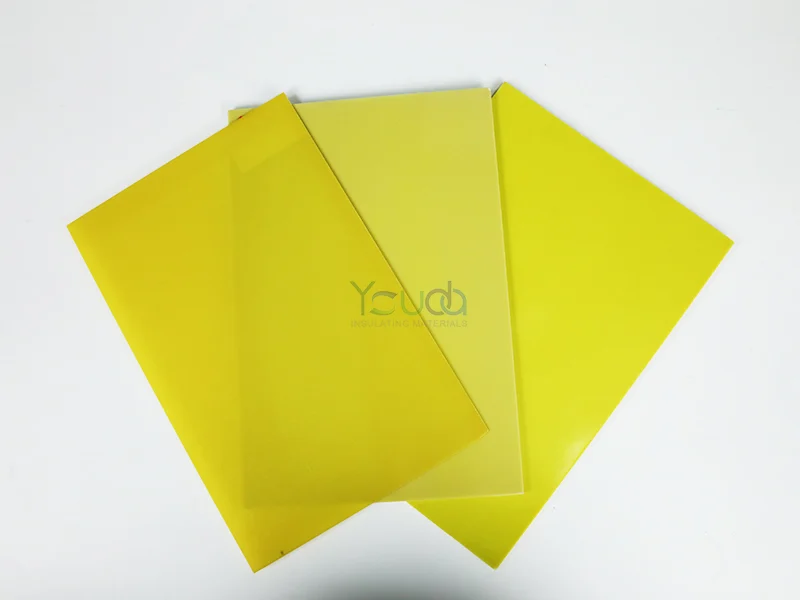
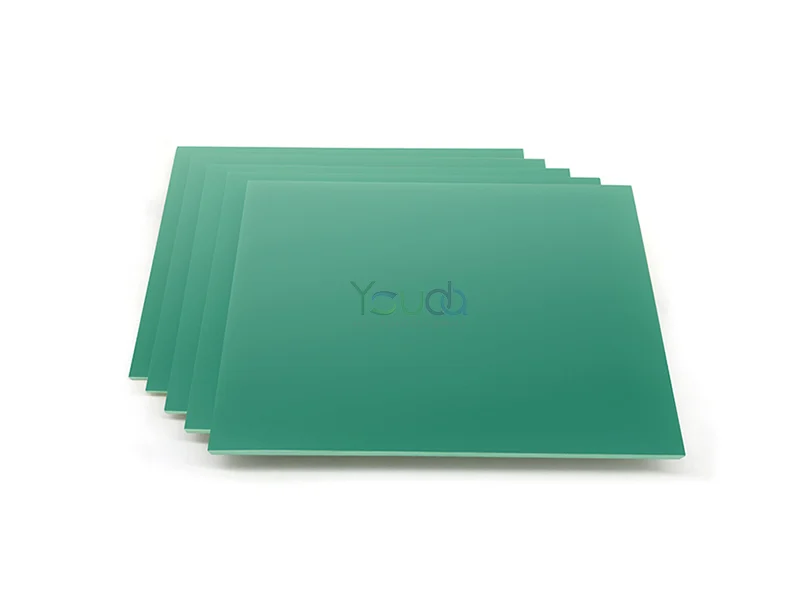
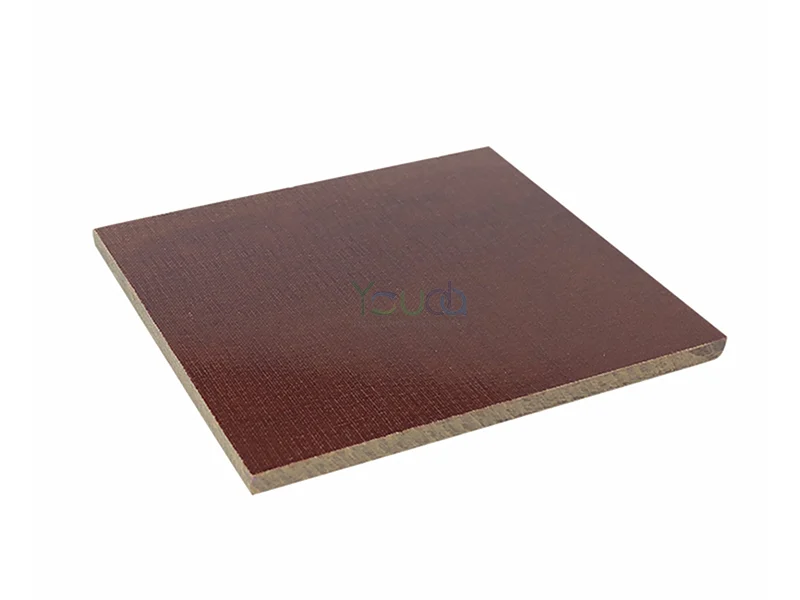
Before diving into standards, it’s crucial to define what makes an epoxy sheet distinct. Epoxy sheets are thermosetting composite laminates typically made from epoxy resin reinforced with glass fiber or paper. Once cured, they form rigid, electrically insulating sheets that resist moisture, chemicals, and heat.
Epoxy sheets are used across industries — from transformers and circuit boards to aerospace tooling and precision machinery. Their performance depends heavily on material formulation, curing process, and testing validation, which is exactly where UL, IEC, and ASTM standards come into play.
Why Standards Matter for Epoxy Sheets
Standards ensure consistency, safety, and reliability across global supply chains. In the case of epoxy sheets, standards determine:
Thermal endurance (ability to withstand high temperatures without degradation)
Dielectric strength (insulating capacity under voltage stress)
Mechanical stability (resistance to bending or compressive forces)
Flame retardancy and safety compliance
Dimensional consistency for precision applications
For industries like power electronics or automotive manufacturing, deviation from these standards can result in system failures, downtime, or even hazards. That’s why compliance with UL, IEC, and ASTM benchmarks is a mark of quality and credibility in epoxy sheet manufacturing.
UL Standards: Safety as the Core Principle
The Underwriters Laboratories (UL) framework focuses on safety and flammability performance. For epoxy sheet products, UL certification is often the first requirement when entering global electrical and electronic markets.
UL 94 – Flammability of Plastic Materials
UL 94 is the most recognized standard for evaluating how epoxy sheet materials react to flame exposure. It categorizes materials into classes such as V-0, V-1, and HB, based on burning duration and self-extinguishing properties.
For epoxy sheets used in circuit boards or enclosures, achieving a V-0 rating is often mandatory, ensuring the sheet self-extinguishes quickly and does not drip flaming particles.
UL 746 – Electrical Insulation Systems
UL 746 defines thermal index ratings — the maximum temperature at which epoxy materials can operate for 20,000 hours without significant degradation. An epoxy sheet with a higher thermal index demonstrates superior aging resistance, crucial for transformers and switchgear.
UL Recognition
When an epoxy sheet passes UL evaluation, it earns the UL Recognized Component Mark, signifying compliance with global safety benchmarks. For OEMs, this recognition simplifies downstream product certification and strengthens consumer trust.
IEC Standards: Global Uniformity and Electrical Reliability
The International Electrotechnical Commission (IEC) focuses on harmonizing testing and classification across borders. IEC standards ensure that epoxy sheets produced in one region meet equivalent requirements worldwide, enabling global interoperability.
IEC 60893 – Industrial Laminates for Electrical Insulation
IEC 60893 is the most critical standard for epoxy sheets, specifically for industrial rigid laminated sheets. It outlines requirements for materials based on epoxy resin systems reinforced with glass or paper. The standard defines parameters like:
Electrical strength (IEC 60243-1 method)
Flexural strength and modulus
Comparative Tracking Index (CTI)
Water absorption and volume resistivity
This comprehensive testing ensures epoxy sheets deliver consistent performance in various climates and electrical conditions.
IEC’s Focus on Global Compatibility
Unlike UL, which is North American–centric, IEC standards emphasize international equivalence. An epoxy sheet conforming to IEC 60893 can be confidently specified for projects in Europe, Asia, or the Middle East, without requiring requalification.
Manufacturers seeking global acceptance often certify under both UL and IEC, bridging the gap between regional safety standards and global electrical norms.
ASTM Standards: Mechanical Integrity and Material Characterization
The American Society for Testing and Materials (ASTM) provides a scientific foundation for measuring epoxy sheet performance. While UL and IEC prioritize safety and electrical behavior, ASTM focuses on mechanical, thermal, and chemical characterization.
ASTM D709 – Laminated Thermosetting Materials
ASTM D709 specifies test methods and classification for thermosetting laminated sheets, including epoxy-based composites. It measures:
Tensile and compressive strength
Impact resistance
Dimensional stability after conditioning
Surface finish and machinability
This standard is vital for non-electrical applications — such as structural supports, mechanical spacers, and tooling plates — where mechanical precision is more critical than electrical insulation.
ASTM D257 – Electrical Resistivity
ASTM D257 complements IEC and UL electrical tests by quantifying surface and volume resistivity under controlled humidity and temperature. High resistivity values confirm the epoxy sheet’s ability to prevent electrical leakage — a key trait in high-voltage environments.
ASTM D3039 – Tensile Properties of Polymer Composites
In high-performance industries like aerospace or automotive manufacturing, epoxy sheets often undergo tensile testing per ASTM D3039 to validate fiber-matrix bonding and ensure consistent structural strength across production batches.
Comparing UL, IEC, and ASTM: A Triangular Standard System
Each standard body serves a unique purpose in defining epoxy sheet quality:
| Standard | Focus Area | Key Tests | Typical Application |
|---|---|---|---|
| UL | Safety and flammability | UL 94, UL 746 | Electrical enclosures, transformers |
| IEC | Electrical performance and global consistency | IEC 60893 | International electrical systems |
| ASTM | Mechanical and material properties | D709, D257, D3039 | Industrial and structural applications |
In practice, top-tier epoxy sheet manufacturers comply with all three frameworks. A sheet rated under UL, validated by IEC, and tested via ASTM provides a comprehensive performance profile — safety, reliability, and mechanical integrity combined.
A Deeper Look: The Role of Epoxy Chemistry in Standard Compliance
One often-overlooked factor in epoxy sheet certification is resin formulation. The ratio of resin to hardener, type of curing agent, and use of fillers or reinforcements can dramatically affect performance under standardized testing.
For example:
Halogen-free epoxy systems are increasingly used to meet UL 94 V-0 while avoiding toxic gas emissions.
Nanofiller-enhanced epoxies can boost ASTM D709 mechanical scores by increasing fracture toughness.
High Tg (glass transition temperature) formulations maintain IEC 60893 electrical strength at elevated temperatures.
Thus, compliance is not just about passing tests — it’s about engineering materials from the molecular level to exceed global expectations.
The Future of Epoxy Sheet Standards: Toward Sustainability and Data Transparency
As industries move toward sustainability and digital traceability, epoxy sheet standards are evolving. Emerging trends include:
Eco-friendly resins that reduce VOCs while maintaining UL safety ratings.
Digital material passports to verify compliance with IEC and ASTM requirements in real time.
AI-driven predictive testing, where machine learning models simulate long-term thermal aging without full-duration experiments.
Future epoxy sheet certification may integrate lifecycle analysis (LCA) alongside safety and performance metrics, ensuring that every certified product supports both operational safety and environmental responsibility.
Selecting the Right Epoxy Sheet: Practical Considerations
When choosing an epoxy sheet for your project, consider aligning application requirements with relevant standards:
Electrical Applications: Prioritize UL 94 and IEC 60893 certifications for insulation reliability and fire safety.
Mechanical Structures: Emphasize ASTM D709 and D3039 for load-bearing precision and rigidity.
Global Projects: Ensure dual compliance (UL + IEC) to streamline international sourcing.
High-Temperature Environments: Look for materials with a UL 746C thermal index ≥ 155°C and IEC 60893 type EP GC203 classification.
Ultimately, compliance ensures not only safety but also brand integrity, customer confidence, and long-term operational success.
Conclusion
Epoxy sheets are far more than simple laminates — they are the result of precise engineering guided by decades of standardization. UL, IEC, and ASTM each play a pivotal role in defining how epoxy sheet materials perform under stress, heat, and electrical load.
For engineers and manufacturers, understanding these standards is not optional — it’s a competitive advantage. By selecting and certifying materials that meet or exceed UL, IEC, and ASTM requirements, companies ensure product safety, consistency, and innovation readiness in a world driven by reliability and trust.
★★★ Recommended Reading:
Understanding the Dielectric Properties of Epoxy Sheet
If you need detailed information about related products, you can let me know via online chat, email, WhatsApp, or any other method, and we will contact you on the same day to solve your problem.