Information Details
Youda insulation material manufacturer regularly updates insulation product information and company news to keep you informed of the latest developments and industry trends.
How Epoxy Sheet Performs Under Extreme Temperature Conditions
Among high-performance industrial materials, the Epoxy Sheet stands out for its combination of electrical insulation, mechanical rigidity, and chemical resistance. But its most defining—and often underestimated—quality is its behavior under extreme temperature conditions. Whether in aerospace assemblies, precision electronics, or high-load industrial components, the thermal stability of epoxy-based laminates determines more than just durability. It shapes system reliability, safety margins, and operational lifespan.
This article takes a deep, technically informed look at a specific thermal characteristic that truly sets the Epoxy Sheet apart: its molecular cross-linking response under thermal stress and the resulting dimensional stability. Rather than repeating common definitions, we explore a less-discussed but critically important mechanism: how the internal polymer architecture behaves when pushed to the upper and lower limits of performance.
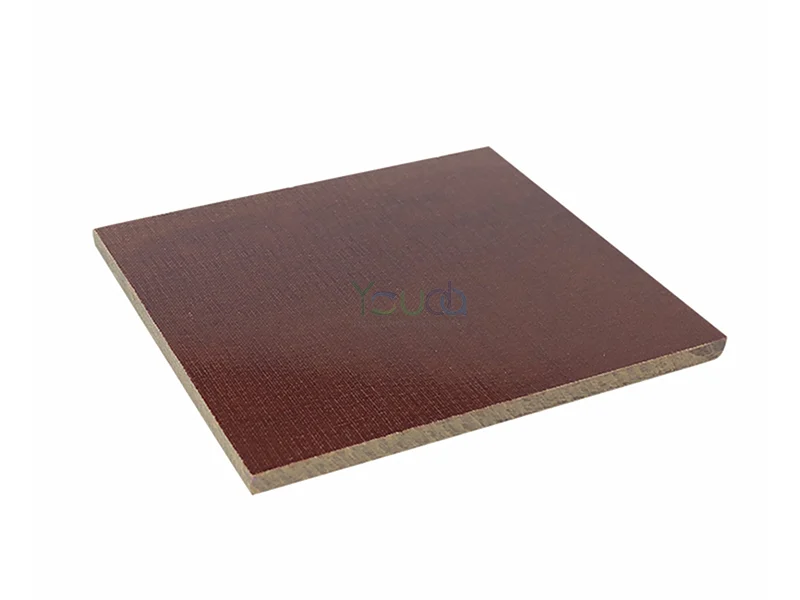
Why Temperature Matters More for Epoxy Sheet Than Most Materials
The epoxy system is a thermoset polymer, which means its properties are permanently defined after curing. Unlike thermoplastics, which soften and re-solidify, an Epoxy Sheet maintains a fixed molecular structure. This structure is the backbone of its performance—and temperature is the force most capable of testing its integrity.
Extreme heat pressures the polymer network to expand, soften, and eventually degrade. Extreme cold, on the other hand, contracts the matrix, risks internal stress fractures, and challenges impact resistance. Understanding what happens between these two extremes is essential for engineers who rely on predictable performance in demanding environments.
The Hidden Variable: Cross-Link Density as the Core of Thermal Behavior
The key to understanding how an Epoxy Sheet behaves under extreme temperatures lies in cross-link density—the number of chemical bonds linking polymer chains within the material. Most general explanations describe it loosely, but its real impact becomes visible only when you examine how temperature interacts with this dense network.
1. Cross-Link Density and Heat Resistance
A high-density cross-link structure restricts molecular movement. When heat attempts to increase kinetic motion, the rigid network resists deformation. This results in:
Higher glass transition temperature (Tg)
The Epoxy Sheet maintains rigidity longer before reaching its softening threshold.Minimal thermal creep
Even under sustained heat load, structural drift is negligible.Improved dimensional stability
Expansion stays controlled, helping prevent warping or distortion.
2. Cross-Link Density and Cold Performance
Extreme cold typically causes materials to become brittle. However, the robust internal framework of a well-engineered Epoxy Sheet distributes contraction forces evenly. This means:
Reduced micro-cracking
Stress is spread through the network, preventing localized fracture points.Stable mechanical strength
While toughness decreases slightly, structural integrity remains intact.Predictable thermal contraction behavior
Essential for precision-fit mechanical assemblies.
Cross-link density is therefore the quiet hero behind temperature resilience—a characteristic engineered directly during manufacturing and carefully controlled by resin formulation and curing conditions.
Epoxy Sheet Behavior in High-Temperature Environments
Different industries define “extreme temperature” differently, but in most technical environments, epoxy composites face conditions from 120°C up to 250°C. What happens in these ranges?
1. Approaching the Glass Transition Temperature (Tg)
This is the most critical zone. The Epoxy Sheet does not melt, but its molecular motion increases. A well-formulated sheet will show:
Gradual, not abrupt, softening
Retention of electrical insulation properties
Limited dimensional drift
This controlled response allows sensitive systems—especially aerospace and electronics—to maintain operational integrity.
2. Prolonged Exposure to High Heat
When temperatures remain high for extended durations, many materials lose stability. Epoxy Sheet, however, shows:
Strong thermal oxidation resistance
Minimal loss of tensile strength
Stable dielectric performance
This makes the material ideal for switchgear panels, turbine components, and infrastructure subjected to constant heat cycles.
3. Thermal Fatigue Resistance
Repeated heating and cooling cycles cause expansion and contraction. The Epoxy Sheet’s cross-linked matrix absorbs these cycles with minimal structural fatigue, preventing:
Delamination
Surface blistering
Warping
Its fatigue resistance directly contributes to its long-term reliability in hostile temperature environments.
Performance in Extreme Cold Environments
At the opposite temperature extreme, Epoxy Sheet demonstrates unique advantages that many polymer-based materials lack.
1. Low-Temperature Toughness
Although all polymers lose flexibility in cold conditions, high-density epoxy laminates exhibit:
Preserved compressive strength
Stable dielectric breakdown thresholds
Predictable impact resistance
This makes them suitable for outdoor electrical installations, cryogenic testing environments, and aerospace vehicles encountering sub-zero altitudes.
2. Cold-Induced Stress Distribution
Cold contraction typically generates internal stress. The Epoxy Sheet’s molecular network distributes this stress uniformly, avoiding the internal micro-fractures that plague other rigid composite materials.
3. Moisture Resistance in Cold Conditions
In freezing temperatures, moisture can be especially damaging. Epoxy Sheet retains low moisture absorption and prevents freeze-expansion issues.
Dimensional Stability: The Defining Thermal Performance Trait
The most valuable advantage of Epoxy Sheet under extreme temperature conditions is its dimensional stability—a property directly tied to the molecular mechanics discussed above.
Unlike metals, which expand uniformly and predictably, or thermoplastics, which undergo significant softening, an Epoxy Sheet maintains extremely tight tolerance levels. This makes the material ideal for:
Precision electrical insulation components
CNC machined industrial parts
Structural inserts in composites
High-temperature insulating gaskets
Dimensional stability is often the deciding factor when engineers choose epoxy-based laminates over alternative materials.
Thermal Degradation Mechanisms: What Happens at the Limit?
Even high-performance materials have their limits. When the Epoxy Sheet is pushed beyond engineered temperature thresholds, three degradation pathways become apparent:
Oxidative chain scission
High heat breaks down the polymer backbone, softening the sheet.Thermal discoloration
Not damaging structurally at first, but a warning sign of thermal saturation.Surface micro-crazing
Caused by rapid thermal shifts beyond design limits.
However, these conditions appear only under extreme misuse. In properly engineered environments, they rarely manifest.
Why Epoxy Sheet Outperforms Many Alternative Materials
Compared to other industrial laminates and composites, the Epoxy Sheet offers a well-balanced mix of benefits:
More stable than phenolic materials at high temperatures
Less brittle than ceramic insulation under cold conditions
More dimensionally stable than thermoplastics across the entire temperature spectrum
Superior electrical insulation compared to metal-based alternatives
The material’s reliability comes from internal chemistry, not external reinforcement, which is why it excels where other composites fail.
Optimizing Epoxy Sheet Selection for Temperature-Critical Applications
Engineers selecting Epoxy Sheet for extreme temperature conditions should evaluate:
Target maximum service temperature
Required electrical insulation rating
Mechanical load at peak temperatures
Cyclic vs. constant thermal exposure
Dimensional tolerance needs
Choosing a grade with the appropriate Tg and cross-link density ensures predictable long-term performance.
Conclusion
The performance of an Epoxy Sheet under extreme temperature conditions is driven by more than simple heat resistance. Its superior reliability comes from its high-density cross-linked molecular framework, which controls how the material expands, contracts, resists stress, and maintains dimensional precision.
By understanding this deeper mechanism, engineers gain a clearer perspective on why Epoxy Sheet remains a trusted material for environments where temperature unpredictability is not an option. Its stability—both thermal and structural—continues to make it indispensable across aerospace, electronics, industrial manufacturing, and high-performance insulation systems.
★★★ Recommended Reading:
Epoxy Sheet Resistance to Chemicals and Solvents Explained
If you need detailed information about related products, you can let me know via online chat, email, WhatsApp, or any other method, and we will contact you on the same day to solve your problem.