Information Details
Youda insulation material manufacturer regularly updates insulation product information and company news to keep you informed of the latest developments and industry trends.
How Quality Control Ensures Reliable G10 Epoxy Sheet Performance
In industries where precision and reliability are non-negotiable, G10 Epoxy Sheet materials play a critical role. From aerospace components to electrical insulation systems, the consistent performance of G10 sheets determines the integrity of the final product. However, that consistency doesn’t happen by accident — it’s the result of rigorous, data-driven quality control processes.
Quality control ensures that every G10 Epoxy Sheet leaving the production line performs to specification, maintains dimensional stability, and meets mechanical and electrical standards. In this article, we explore how advanced quality control mechanisms drive the reliability of G10 Epoxy Sheets, focusing on material integrity, resin-glass interaction, and thermal consistency.

1. Understanding the Core of G10 Epoxy Sheet Composition
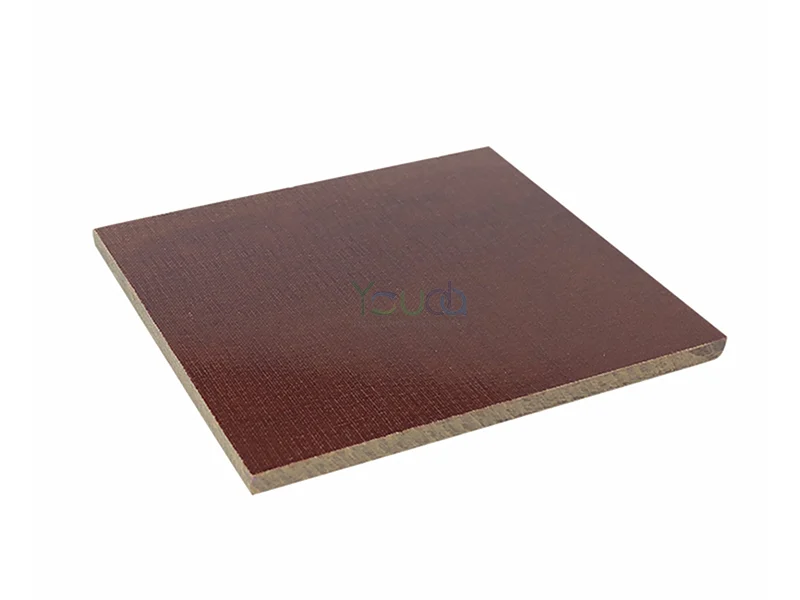
Before diving into quality control, it’s important to understand what defines a G10 Epoxy Sheet. These sheets are made from layers of woven glass cloth impregnated with epoxy resin, laminated under heat and pressure to form a rigid, dense, and moisture-resistant composite.
The resulting material exhibits:
High dielectric strength
Excellent mechanical stability
Resistance to moisture, heat, and chemicals
Such properties make G10 a go-to material for precision engineering and high-voltage insulation. Yet, these benefits depend entirely on how precisely the resin and fiberglass layers are controlled during production. Even minor deviations — a shift in resin viscosity, a slight misalignment of weave — can compromise structural reliability.
2. The Role of Quality Control in G10 Epoxy Sheet Manufacturing
Quality control in G10 Epoxy Sheet production operates as a continuous verification system. Rather than testing only at the end of the process, it begins with raw materials and extends through every phase — resin formulation, lamination, curing, and final inspection.
Each step is monitored to ensure:
Uniform resin content: Prevents dry spots or over-saturation.
Consistent glass weave orientation: Maintains isotropic strength properties.
Precise temperature and pressure control: Guarantees proper crosslinking of the epoxy.
By maintaining strict control over these variables, manufacturers achieve a predictable and repeatable G10 Epoxy Sheet performance profile.
3. Resin Quality: The Foundation of Structural Reliability
Epoxy resin is the backbone of a G10 Epoxy Sheet. The purity, viscosity, and curing behavior of the resin directly affect the sheet’s strength and thermal performance.
High-end manufacturers use advanced spectroscopic analysis and rheological testing to ensure resin batches remain consistent. Any variation in polymer chain length or contamination can alter the curing kinetics, leading to inconsistent hardness or delamination under stress.
Through quality control checkpoints, each resin batch is tested for:
Molecular weight distribution
Viscosity under controlled shear rates
Gel time accuracy
Moisture content
Only resin that meets predefined specifications proceeds to the next production stage. This disciplined screening minimizes the risk of brittle or under-cured G10 Epoxy Sheets entering the market.
4. Glass Fabric Inspection and Alignment Control
The fiberglass component in a G10 Epoxy Sheet determines its tensile strength and dimensional stability. The weave structure — typically E-glass or S-glass — must maintain uniform density and orientation throughout the lamination stack.
Automated optical inspection systems now play a vital role in ensuring weave consistency. Cameras and AI algorithms detect micro-defects, such as fiber misalignment or broken strands, long before lamination begins. These early detections prevent localized weak points that could compromise electrical insulation or structural reliability.
Moreover, glass cloth humidity and surface treatment are carefully controlled. Proper silane coupling agents ensure strong resin-glass adhesion, preventing delamination under heat cycles.
5. Lamination Process Control: The Precision Phase
Lamination defines the final integrity of the G10 Epoxy Sheet. The interplay between heat, pressure, and curing time determines how well resin flows into the glass network and how completely the polymer crosslinks.
Modern facilities use automated press monitoring systems that regulate:
Pressure ramp-up rate
Temperature uniformity across layers
Curing cycle duration
Real-time data logging enables operators to detect anomalies, such as temperature gradients or pressure fluctuations. This data-driven approach minimizes human error and ensures every G10 Epoxy Sheet maintains identical mechanical properties across batches.
Quality control teams often conduct in-situ dielectric and thickness uniformity tests during lamination. These ensure the epoxy has fully impregnated the glass fabric and that voids or resin-rich zones are eliminated.
6. Post-Curing and Dimensional Stability Verification
After lamination, post-curing ensures complete polymerization of the epoxy system. This phase stabilizes the material’s dimensions and enhances heat resistance.
Quality control at this stage involves thermal cycling and dimensional checks using precision laser metrology. The goal is to verify that each G10 Epoxy Sheet maintains flatness and thickness within micrometer tolerances.
Inconsistent post-curing can result in thermal stress, warping, or unpredictable electrical behavior. By implementing controlled oven profiles and verifying thermal expansion coefficients, manufacturers guarantee that each sheet will perform predictably in demanding environments such as circuit boards or transformer insulation.
7. Mechanical and Electrical Property Testing
The hallmark of a reliable G10 Epoxy Sheet lies in its ability to maintain strength and insulation under extreme stress. To verify this, manufacturers conduct a comprehensive set of mechanical and electrical tests, including:
Flexural strength and modulus (ASTM D790)
Compressive strength (ASTM D695)
Tensile properties (ASTM D638)
Dielectric breakdown voltage (ASTM D149)
Insulation resistance (ASTM D257)
Automated test benches collect data for statistical process control (SPC), ensuring every production lot falls within tight specification limits. This analytical approach transforms quality control from reactive testing to predictive assurance — identifying potential deviations before they affect final product reliability.
8. Surface Finish and Machinability Evaluation
While internal structure dictates performance, the surface finish of a G10 Epoxy Sheet influences its usability in machining and assembly.
Quality inspectors measure surface roughness, gloss uniformity, and edge chipping behavior. Precision CNC test cuts determine machinability without fiber pull-out or resin cracking. Sheets that fail to meet these benchmarks are reclassified or rejected.
This attention to surface quality ensures that engineers can reliably machine G10 Epoxy Sheets into precision components without dimensional drift or tool wear anomalies.
9. Traceability and Data-Driven Quality Management
Modern quality control isn’t limited to testing — it’s about traceability. Each G10 Epoxy Sheet batch is digitally tracked from raw material to final product.
Advanced Manufacturing Execution Systems (MES) capture process parameters, test results, and operator data. This traceability builds accountability and enables root-cause analysis if performance deviations ever occur.
In a world where regulatory compliance and documentation matter, this digital record ensures transparency — a key pillar of trust for industries like aerospace, defense, and power generation.
10. Continuous Improvement Through Statistical Process Control
Quality control is not static. Leading manufacturers use statistical process control (SPC) and Six Sigma methodologies to continuously refine their G10 Epoxy Sheet production.
By analyzing process variance, they identify subtle correlations — for instance, how resin viscosity shifts with ambient humidity or how press pressure affects dielectric uniformity.
These insights fuel iterative improvements, ensuring that each new generation of G10 Epoxy Sheets achieves tighter tolerances and enhanced reliability.
11. Environmental and Sustainability Aspects of Quality Control
As sustainability becomes integral to industrial materials, quality control also plays a role in waste reduction and eco-efficiency.
By optimizing curing cycles and minimizing resin waste, manufacturers reduce energy consumption and material scrap. Moreover, precise process control allows re-use of off-cut materials in secondary applications without compromising performance integrity.
A sustainable quality control approach doesn’t just ensure reliable G10 Epoxy Sheet performance — it contributes to long-term resource efficiency and reduced carbon footprint.
Conclusion: Quality Control as the Core of Reliable G10 Epoxy Sheet Performance
Every G10 Epoxy Sheet embodies a chain of precision decisions. From resin formulation to post-curing verification, quality control ensures that each sheet meets the rigorous demands of modern engineering.
Reliability in G10 isn’t an outcome — it’s a process, driven by data, verified by science, and perfected through continuous improvement. Manufacturers who invest in advanced quality control systems don’t just deliver better products; they provide the assurance that every sheet will perform exactly as expected — every time.
★★★ Recommended Reading:
Innovations in G10 Epoxy Sheet Production Technology
If you need detailed information about related products, you can let me know via online chat, email, WhatsApp, or any other method, and we will contact you on the same day to solve your problem.