Information Details
Youda insulation material manufacturer regularly updates insulation product information and company news to keep you informed of the latest developments and industry trends.
How Strong Is G10 Fiberglass Sheet? A Deep Dive into Its Mechanical Properties
Market Dynamics: G10 Fiberglass Sheet Supply Chain Under Pressure
Global demand for G10 fiberglass sheet has surged in 2025, triggering significant supply constraints and price volatility. Industry reports indicate a 12–18% year-over-year increase in material costs, with lead times extending from 4 to over 10 weeks in key markets like North America and Europe. This tightening stems primarily from two interrelated factors: persistent shortages of high-purity epoxy resins—critical to G10’s structural integrity—and heightened demand from the EV and renewable energy sectors, which rely on G10 for high-voltage insulation and mechanical stability.
Given these pressures, procurement teams are strongly advised to conduct immediate supply chain audits and secure forward contracts. Understanding not just what G10 fiberglass sheet is, but how deeply its mechanical properties align with your application’s stress thresholds, can mean the difference between operational continuity and costly redesigns.
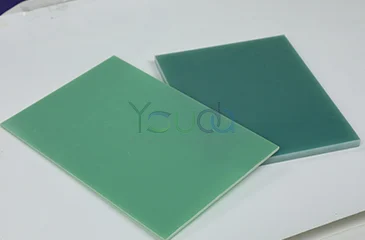
How Strong Is G10 Fiberglass Sheet? A Deep Dive into Its Mechanical Properties
In an era where material performance directly dictates product reliability—and supply chain resilience—the question “How strong is G10 fiberglass sheet?” transcends mere curiosity. It becomes a strategic engineering inquiry. While many resources list generic tensile or flexural strength numbers, few explore why G10 exhibits such exceptional mechanical behavior under extreme conditions, or how its microstructure enables performance that outpaces standard FR-4 or even some metals in specific contexts. This article moves beyond surface-level specs to dissect the mechanical DNA of G10 fiberglass sheet, focusing on its anisotropic strength response, fatigue resistance in cyclic loading environments, and performance under thermal-mechanical coupling—critical considerations for aerospace, electric vehicle (EV) battery systems, and high-power electronics.
The Structural Architecture Behind G10’s Strength
G10 fiberglass sheet is a thermoset composite composed of woven E-glass fabric impregnated with brominated epoxy resin, then cured under high pressure and temperature. Unlike isotropic materials (e.g., aluminum or steel), G10’s strength is directionally dependent—a feature rooted in its laminated architecture. The continuous glass fibers provide primary load-bearing capacity along their orientation, while the epoxy matrix transfers shear stresses between layers and protects against environmental degradation.
This synergy yields remarkable mechanical efficiency. Typical tensile strength ranges from 345 to 415 MPa (50,000–60,000 psi) parallel to the fiber weave, but drops by 30–40% in the transverse direction. Similarly, flexural strength exceeds 480 MPa (70,000 psi), with a flexural modulus often above 24 GPa. These values rival those of many engineering plastics and even some aluminum alloys—but with far superior electrical insulation and corrosion resistance.
Crucially, G10’s strength isn’t just about peak load capacity; it’s about consistency under duress. The cross-linked epoxy network prevents plastic deformation, ensuring elastic behavior up to failure—a vital trait in precision fixtures or insulating spacers where dimensional stability is non-negotiable.
Anisotropy in Action: Designing With Directional Strength
One of the most overlooked yet decisive aspects of G10 fiberglass sheet performance is its anisotropic nature. Engineers who treat it as an isotropic material risk premature failure. For instance, in a high-vibration motor mount, loads applied perpendicular to the fiber weave may induce delamination or microcracking long before theoretical strength limits are reached.
Smart design leverages this anisotropy. In printed circuit board (PCB) jigs or semiconductor test sockets, G10 panels are often oriented so that clamping forces align with the warp direction of the weave—maximizing compressive and shear resistance. Similarly, in EV battery module separators, G10 sheets are layered with alternating fiber orientations (0°/90°) to create quasi-isotropic panels that resist multidirectional thermal expansion stresses during charge cycles.
Understanding this directional dependency allows designers to extract maximum performance per unit thickness—reducing weight and cost without compromising safety margins. This is especially relevant today, as supply constraints push engineers to optimize every millimeter of material.
Fatigue Resistance: G10’s Hidden Advantage in Dynamic Applications
While static strength dominates datasheets, real-world applications often involve cyclic loading—thermal cycling in power inverters, mechanical vibration in drones, or repeated insertion forces in test fixtures. Here, G10 fiberglass sheet demonstrates a lesser-known but critical strength: exceptional fatigue resistance.
Unlike metals that develop crack propagation under repeated stress below yield strength, G10’s composite structure dissipates energy through fiber-matrix debonding and microcrack deflection—mechanisms that delay catastrophic failure. Accelerated life testing shows G10 retains over 85% of its initial flexural strength after 10⁶ stress cycles at 60% of ultimate load, provided operating temperatures remain below 130°C (its glass transition point).
This makes G10 ideal for components in wind turbine pitch control systems or robotic end-effectors, where millions of motion cycles are expected. The absence of creep—another hallmark of thermoset composites—further ensures long-term dimensional fidelity, eliminating the need for recalibration or replacement common with thermoplastics.
Thermal-Mechanical Coupling: Strength at Temperature Extremes
A defining challenge in modern engineering is maintaining mechanical integrity across wide temperature swings. G10 fiberglass sheet excels here, but only within its operational envelope. Its continuous service temperature is typically rated at 130°C, though short-term exposure up to 150°C is possible.
What’s remarkable is how G10 retains stiffness and strength as temperatures rise—unlike many polymers that soften dramatically near Tg. At 100°C, G10 still exhibits over 70% of its room-temperature flexural modulus. This thermal-mechanical stability stems from the highly cross-linked brominated epoxy, which resists chain mobility even near its glass transition.
However, exceeding 130°C initiates irreversible degradation: the matrix softens, interlaminar shear strength plummets, and moisture (if present) can cause blistering via steam pressure. Thus, while G10 is stronger than FR-4 at elevated temperatures, it is not suitable for under-hood automotive applications or near high-power transformers without active cooling.
Designers must therefore pair G10’s mechanical data with thermal modeling—especially in compact EV battery packs where localized hot spots can exceed ambient readings by 20–30°C. Proper thermal interface management ensures G10 operates within its “strength-preserving” zone.
Comparative Performance: Where G10 Outshines Alternatives
To contextualize G10’s strength, consider its performance relative to common alternatives:
- FR-4: Shares similar composition but uses lower-grade resin and less dense lamination. G10 offers ~20% higher flexural strength and better moisture resistance.
- Phenolic Cotton (XXXP): Cheaper but absorbs moisture, leading to swelling and strength loss. G10 remains dimensionally stable in humid environments.
- Aluminum: Higher thermal conductivity but conducts electricity and corrodes. G10 provides electrical isolation with comparable stiffness-to-weight ratio in thin sections.
- PEEK or Ultem: Superior high-temp performance but at 5–10x the cost. G10 delivers 80% of the mechanical utility at a fraction of the price for <130°C applications.
This balance of strength, insulation, and cost explains G10’s dominance in high-reliability niches—from military radar housings to semiconductor wafer carriers.
Strategic Implications: Why Mechanical Depth Matters in a Tight Market
Returning to the supply chain realities outlined earlier, superficial material selection is no longer viable. When lead times stretch and prices climb, every sheet of G10 fiberglass sheet must perform optimally—no room for over-engineering or unexpected failures.
Deep knowledge of its mechanical behavior enables smarter decisions:
- Specifying exact fiber orientation to minimize material use.
- Validating thermal margins to avoid field failures.
- Leveraging fatigue data to extend component lifespan.
In essence, technical mastery becomes a procurement strategy. Companies that understand how G10 derives its strength—not just that it is strong—can design more efficiently, reduce waste, and buffer against market volatility.
Conclusion
The strength of G10 fiberglass sheet is not a single number—it’s a multidimensional profile shaped by fiber architecture, resin chemistry, and environmental interaction. Its true value emerges when engineers move beyond datasheet averages and engage with its anisotropic response, fatigue endurance, and thermal-mechanical limits. In today’s constrained supply landscape, this depth of understanding isn’t academic; it’s operational armor. By aligning design intent with G10’s intrinsic mechanical logic, industries can maintain performance, reliability, and cost control—even as the market tightens around them.
★★★ Recommended Reading:
Environmental Regulations in G10 Epoxy Sheet Manufacturing
If you need detailed information about related products, you can let me know via online chat, email, WhatsApp, or any other method, and we will contact you on the same day to solve your problem.