Information Details
Youda insulation material manufacturer regularly updates insulation product information and company news to keep you informed of the latest developments and industry trends.
How to Determine if GPO-3 Insulation Board Meets Quality Standards
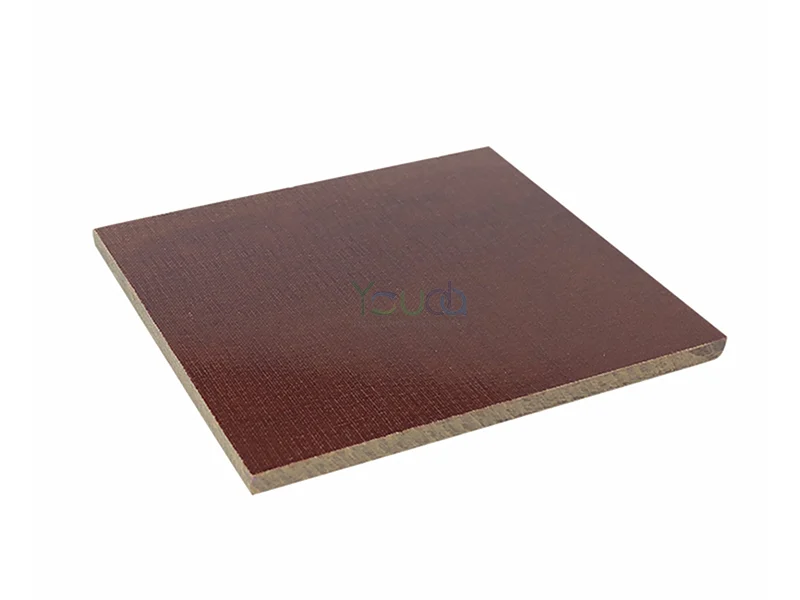
The GPO-3 insulation sheet is widely used in electrical systems, switchgear, transformers, motor housings, and structural supports where flame resistance, mechanical stability, and dielectric strength are critical. However, the real challenge for engineers and procurement specialists is not identifying what GPO-3 is, but determining whether a specific GPO-3 insulation sheet actually meets the quality standards needed for long-term performance.
Most discussions focus on general features—reinforced fiberglass, good heat resistance, reliable dielectric strength. While true, these descriptions don’t explain how to identify the difference between an average GPO-3 insulation board and a high-performance one. The real distinction lies deeper, within the micro-structure integrity of the composite itself.
This article takes a professional, original, and highly practical approach to evaluating quality: Instead of repeating common properties, we break down the core structural and performance signatures that reveal whether a GPO-3 insulation sheet meets industry-level quality standards.

Why Quality Verification Matters for GPO-3 Insulation Sheet
GPO-3 is used in high-risk electrical and mechanical environments. If its internal bonding, flame-resistant formulation, or fiberglass reinforcement is substandard, several problems can arise:
Surface tracking in high-voltage zones
Cracking under mechanical load
Delamination in thermal-cycling environments
Reduced safety margins in switchgear and power distribution
Premature system failure in humid or corrosive conditions
A well-manufactured GPO-3 insulation sheet must deliver consistent structural integrity and electrical reliability over years of operation—not only during installation. This is why quality verification is essential before selecting any supplier or approving any batch.
The Unique Indicator of True GPO-3 Quality: Micro-Structure Integrity
To create a unique analytical angle, this article focuses on one aspect that directly reflects manufacturing quality: micro-structure integrity.
GPO-3 is a composite material made from:
unsaturated polyester resin
continuous strand fiberglass mat
flame-retardant fillers
The way these components bond at micro-scale determines everything from flammability behavior to mechanical strength. A high-quality GPO-3 insulation sheet shows uniform resin distribution, stable fiber anchoring, and low internal void content. These factors influence:
tracking resistance
tensile and flexural strength
thermal expansion consistency
arc resistance
long-term dielectric performance
Poor quality materials often hide their defects until they are installed. Micro-structure-based evaluation allows you to detect problems before they become failures.
How to Determine if GPO-3 Insulation Sheet Meets Quality Standards
Below are the core factors that define high-quality GPO-3 and how to evaluate them from a technical perspective.
1. Fiber-Resin Interface Quality (The Most Crucial Factor)
The interface between fiberglass and resin determines bonding stability and mechanical properties.
What to Look For
Resin fully wets the fiberglass mat without dry patches
Fibers are uniformly distributed and properly anchored
No visible fiber floating or resin pooling
Minimal micro-voids around fiber intersections
Why It Matters
A strong fiber-resin interface ensures:
high tensile strength
crack resistance under load
dimensional stability across thermal cycles
improved electrical reliability under stress
In contrast, poorly bonded fibers act as crack starters and reduce long-term insulation performance.
2. Resin Distribution Uniformity
High-quality GPO-3 insulation sheet has consistent resin saturation throughout the board thickness.
How to Evaluate
Check for color uniformity
Observe cross-sections for even density
Ensure no resin-rich or resin-starved zones
Impact on Performance
Uneven resin creates weak spots that can:
warp under heat
crack under load
cause dielectric breakdown
Uniform resin distribution is a key indicator of stable manufacturing and precise mixing control.
3. Void Content and Porosity Control
Voids are microscopic gas pockets trapped during production. Excessive void content is one of the strongest predictors of substandard quality.
Red Flags
Random bubbles visible on cut surfaces
Porosity clusters near fiber layers
Uneven density when measured across sections
Why It Matters
High void content reduces:
dielectric strength
mechanical impact resistance
flame-retardant performance
dimensional stability
This is a critical measurement because voids also accelerate aging under electrical stress.
4. Flame-Retardant Composition Stability
A quality GPO-3 insulation sheet must maintain stable flammability behavior across batches.
Indicators of Proper Flame-Retardant System
Consistent char formation
Self-extinguishing behavior under controlled flame exposure
No excessive dripping or molten deformation
Clean combustion boundaries
If flame-retardant additives are poorly dispersed or under-loaded, the material may behave unpredictably under heat.
5. Mechanical Property Consistency
Mechanical strength is a major benchmark for evaluating GPO-3 quality.
Key Properties to Assess
Flexural strength
Tensile strength
Impact resistance
Compressive strength
Shear stability
Good materials deliver stable readings with minimal deviation. Wide variations indicate inconsistent fiber-resin distribution or poor curing processes.
6. Thermal Stability and Heat Distortion Behavior
Because GPO-3 insulation sheet is frequently used in elevated-temperature environments, thermal reliability is essential.
What to Check
Coefficient of thermal expansion
Heat distortion temperature
Resistance to thermal cycling
Dimensional stability at operating temperatures
A high-quality sheet retains structural coherence under repeated heat exposure.
7. Dielectric Strength and Surface Tracking Resistance
Electrical performance defines the safety level of GPO-3 materials.
Critical Factors
Dielectric breakdown strength
Insulation resistance
Comparative tracking index (CTI)
Arc resistance
These factors reveal whether the micro-structure supports long-term electrical reliability.
Why Tracking Matters
Surface tracking is the formation of conductive paths caused by contamination, humidity, or heat.
A stable GPO-3 insulation sheet resists tracking due to:
a dense resin matrix
uniform filler distribution
proper curing
Poor tracking resistance is often a sign of low-grade resin or excessive porosity.
8. Dimensional Accuracy and Machinability
Mechanical precision matters for installation.
Quality Indicators
Accurate thickness tolerance
No delamination during machining
Stable edges with no excessive chipping
Consistent density across cut areas
Low-quality boards tend to splinter, chip, or warp during processing.
9. Moisture Absorption Behavior
Moisture is one of the leading causes of insulation failure.
Evaluate Using
Water absorption rates
Dimensional changes after humidity exposure
Surface stability in condensation environments
A high-grade GPO-3 insulation sheet shows minimal swelling or degradation when exposed to moisture.
How to Conduct a Professional Quality Evaluation Process
A structured assessment prevents oversight and ensures consistency.
Step 1: Visual and Surface Inspection
Begin with obvious defects:
surface pits
fiber exposure
resin pockets
visible voids
color variations
This initial step eliminates clearly inferior batches.
Step 2: Cross-Sectional Micro-Structure Review
Examine the board cross-section:
fiber strand uniformity
resin consistency
void distribution
filler dispersion
This reveals internal quality that surface inspections cannot detect.
Step 3: Mechanical and Thermal Testing
Verify property consistency across:
tensile testing
flexural testing
thermal aging tests
These measurements confirm whether the board meets structural expectations.
Step 4: Dielectric Performance Testing
Electrical performance is the final and most important validation step for a GPO-3 insulation sheet:
dielectric strength
arc resistance
tracking resistance
If all categories remain stable, the material can be considered high quality.
Signs of a Substandard GPO-3 Insulation Sheet
To make evaluation easier, here are common indicators of poor manufacturing:
brittle edges or unexpected chipping
inconsistent coloration
resin pooling or dry fiber regions
excessive porosity
irregular flame response
uneven density
weak mechanical test results
Even one of these signs may justify rejecting a batch.
Conclusion
Determining whether a GPO-3 insulation sheet meets quality standards requires more than checking basic mechanical or dielectric properties. The most reliable predictor of long-term performance is micro-structure integrity, which reflects the precision of the resin-fiber bonding, filler dispersion, void content, and curing quality.
By evaluating the internal structure—combined with mechanical, thermal, and electrical performance tests—you can confidently identify superior materials and avoid low-grade substitutes.
A high-quality GPO-3 insulation sheet ensures:
consistent insulating performance
strong mechanical stability
predictable flame behavior
reduced maintenance costs
extended service life in demanding environments
★★★ Recommended Reading:
GPO-3 Insulation Board Processing Methods and Cutting Tips
If you need detailed information about related products, you can let me know via online chat, email, WhatsApp, or any other method, and we will contact you on the same day to solve your problem.