Information Details
Youda insulation material manufacturer regularly updates insulation product information and company news to keep you informed of the latest developments and industry trends.
Mechanical Strength & Dimensional Stability of FR4 Fiberglass Board
Market Dynamics: FR4 Fiberglass Board Supply Chain Under Pressure
Global procurement teams are facing mounting pressure as prices for FR4 Fiberglass Board continue to climb, with lead times extending beyond 12 weeks in some regions. According to recent industry reports, average material costs have risen by 18–22% year-over-year, driven primarily by constrained epoxy resin availability and surging demand from automotive and industrial electronics sectors. Geopolitical trade restrictions on key raw materials—particularly brominated flame retardants and woven E-glass—have further tightened supply.
For OEMs and contract manufacturers, this volatility underscores an urgent need to reassess sourcing strategies. Proactive engagement with qualified suppliers, coupled with early-stage material specification reviews, is no longer optional—it’s a strategic imperative to avoid production bottlenecks in 2025 and beyond.
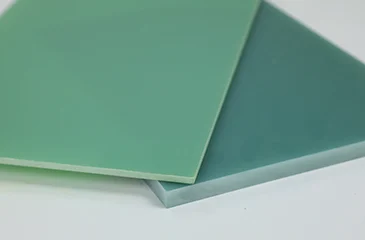
Mechanical Strength & Dimensional Stability of FR4 Fiberglass Board: Engineering Resilience in High-Stress PCB Applications
The ongoing supply constraints surrounding FR4 Fiberglass Board have spotlighted more than just cost and availability—they’ve revealed a critical knowledge gap among design engineers: a deep understanding of how mechanical and thermal performance parameters directly influence long-term reliability, especially under mechanical stress or thermal cycling. While many treat FR4 as a commodity substrate, its behavior under load, moisture, and temperature extremes varies significantly based on resin formulation, glass weave style, and lamination quality. This article delves into a rarely discussed but mission-critical aspect: how the interplay between tensile/compressive strength and coefficient of thermal expansion (CTE) governs dimensional stability in high-layer-count or thermally demanding printed circuit boards (PCBs).
Why Mechanical Integrity Matters Beyond “Just Holding Traces”
In consumer electronics, FR4’s role is often reduced to a passive carrier for copper traces. But in aerospace, automotive power modules, or industrial motor drives, the FR4 Fiberglass Board must function as a structural component—withstanding vibration, thermal shock, and mechanical assembly forces without warping, cracking, or delaminating. Failure here isn’t just electrical; it’s catastrophic.
The mechanical strength of FR4 derives from two synergistic elements: the epoxy resin matrix and the embedded E-glass reinforcement. The resin provides adhesion, chemical resistance, and dielectric properties, while the woven glass fabric delivers tensile and flexural rigidity. However, not all FR4 is created equal. Standard-grade FR4 may exhibit a flexural strength of ~300 MPa, whereas high-Tg (glass transition temperature) variants can exceed 400 MPa—critical when boards undergo reflow soldering above 260°C or operate in under-hood automotive environments.
The Hidden Threat: Z-Axis CTE and Microvia Reliability
One of the most insidious failure modes in multilayer PCBs stems from mismatched thermal expansion—particularly in the Z-axis (through-thickness direction). While the X-Y plane CTE of FR4 Fiberglass Board is tightly controlled by the glass weave (typically 12–17 ppm/°C below Tg), the Z-axis CTE can balloon to 60–80 ppm/°C above Tg due to resin softening.
This becomes critical in HDI (High-Density Interconnect) designs featuring stacked microvias. During thermal cycling—such as repeated power-on/off events—the differential expansion between copper (CTE ≈ 17 ppm/°C) and the softened resin creates shear stress at via barrels. Over time, this leads to barrel cracks, intermittent opens, or complete via failure. High-performance FR4 Fiberglass Board formulations mitigate this by incorporating multifunctional epoxy resins and silica fillers that suppress Z-axis expansion even above Tg, maintaining dimensional fidelity during thermal excursions.
Glass Weave Style: More Than Just a Manufacturing Detail
Designers often overlook how the choice of glass weave—standard 1080, 2116, or 7628—affects both mechanical robustness and signal integrity. Tighter weaves (e.g., 106 or 1080) offer superior dimensional stability due to higher glass content (~65% vs. ~52% in 7628), reducing resin-rich zones prone to swelling under humidity. This is crucial for impedance-controlled traces in RF or high-speed digital applications, where even 0.1% planar distortion can skew timing margins.
Moreover, tighter weaves enhance compressive strength perpendicular to the board surface—essential during automated optical inspection (AOI) or in-circuit testing (ICT), where probe pins exert localized pressure. Boards made with coarse weaves may exhibit micro-dents or subsurface delamination under repeated test cycles, compromising long-term reliability.
Moisture Absorption: The Silent Compromiser of Dimensional Stability
FR4 is hygroscopic. Standard grades absorb 0.10–0.15% moisture by weight when exposed to 50% relative humidity—seemingly negligible, but enough to trigger problems during lead-free reflow. Trapped moisture vaporizes rapidly above 100°C, generating internal pressure that can cause “popcorning” (delamination) or measling (micro-cracks around vias).
More critically, absorbed water acts as a plasticizer, lowering the effective Tg of the resin and increasing CTE. A board that appears dimensionally stable in dry storage may warp unpredictably during assembly if moisture isn’t properly baked out. Advanced FR4 Fiberglass Board variants address this through hydrophobic resin modifiers and optimized cure cycles, reducing moisture uptake to <0.08%—a non-trivial advantage in humid climates or high-reliability manufacturing.
Real-World Validation: Thermal Shock Testing as a Proxy for Field Performance
To quantify dimensional resilience, industry standards like IPC-TM-650 2.6.7 subject FR4 Fiberglass Board samples to cyclic immersion between –55°C and +125°C. High-quality boards survive 1,000+ cycles with <0.5% change in diagonal dimension and no evidence of barrel cracking in plated through-holes. Inferior materials often fail by cycle 300–500, revealing hidden weaknesses in resin-glass bonding or filler dispersion.
Such testing isn’t academic—it mirrors real-world conditions in electric vehicle inverters, where power modules cycle from ambient to >100°C multiple times daily. Selecting an FR4 grade validated under these protocols isn’t over-engineering; it’s risk mitigation.
Strategic Implications for Design and Procurement
Given current supply volatility, simply swapping FR4 suppliers based on price or lead time is perilous. Two boards labeled “FR4” may share the same UL94 V-0 flammability rating yet differ drastically in mechanical endurance. Engineers must demand full datasheets—not just Tg and Dk values, but flexural modulus, Z-axis CTE curves, moisture absorption rates, and thermal stress test results.
Procurement teams, in turn, should collaborate early with laminate vendors to lock in material specifications aligned with application stress profiles. For instance, an industrial IoT sensor deployed in a desert environment demands low moisture uptake and high compressive strength, whereas a server backplane prioritizes low Z-CTE and tight weave uniformity.
Conclusion: Depth of Knowledge as a Competitive Shield
The market turbulence surrounding FR4 Fiberglass Board is unlikely to subside soon. Yet within this challenge lies an opportunity: organizations that invest in granular technical understanding of material behavior gain a decisive edge. Recognizing that mechanical strength and dimensional stability aren’t static specs—but dynamic responses to environmental and operational stresses—enables smarter design choices, more resilient supply chains, and ultimately, products that endure.
In an era where a single via failure can trigger a field recall costing millions, treating FR4 as anything less than a precision-engineered composite is a strategic miscalculation. The boards may look identical on the surface—but their performance under pressure tells a very different story.
★★★ Recommended Reading:
Electrical Insulation Performance of FR4 Epoxy Laminate Sheets
If you need detailed information about related products, you can let me know via online chat, email, WhatsApp, or any other method, and we will contact you on the same day to solve your problem.