Motor Insulation Mica Tape and Cable Fire Resistant Mica Tape
Choose the tape by its role in the complete insulation system
A request for mica tape is incomplete until its application is known. Tape for a motor coil insulation system and tape used as a fire barrier in a cable may share mica as an important constituent, yet they serve different design objectives and processing routes. Matching the name, color, or thickness does not establish interchangeability. Begin with the role of the tape in the finished product, then identify the material construction and evidence needed for that role.
Start with two different questions
For a motor or generator coil, the question concerns the insulation system around conductors and coil regions during manufacture and intended operation. The tape may participate in a resin based system with defined wrapping, impregnation, and curing requirements. For a fire resistant cable, the question concerns the specified cable’s ability to maintain circuit integrity under a defined fire test. These questions overlap in their use of insulating materials, but they are not the same performance requirement.
The distinction should appear at the start of an inquiry. State whether the tape is intended for a coil insulation process, a cable fire barrier, or another application. Include the relevant drawing, approved material reference, or product requirement. A supplier cannot reliably choose the right construction from the word mica alone. Supplying the application context early also prevents a commercial conversation about available widths from moving ahead before the more important material and system questions have been resolved.

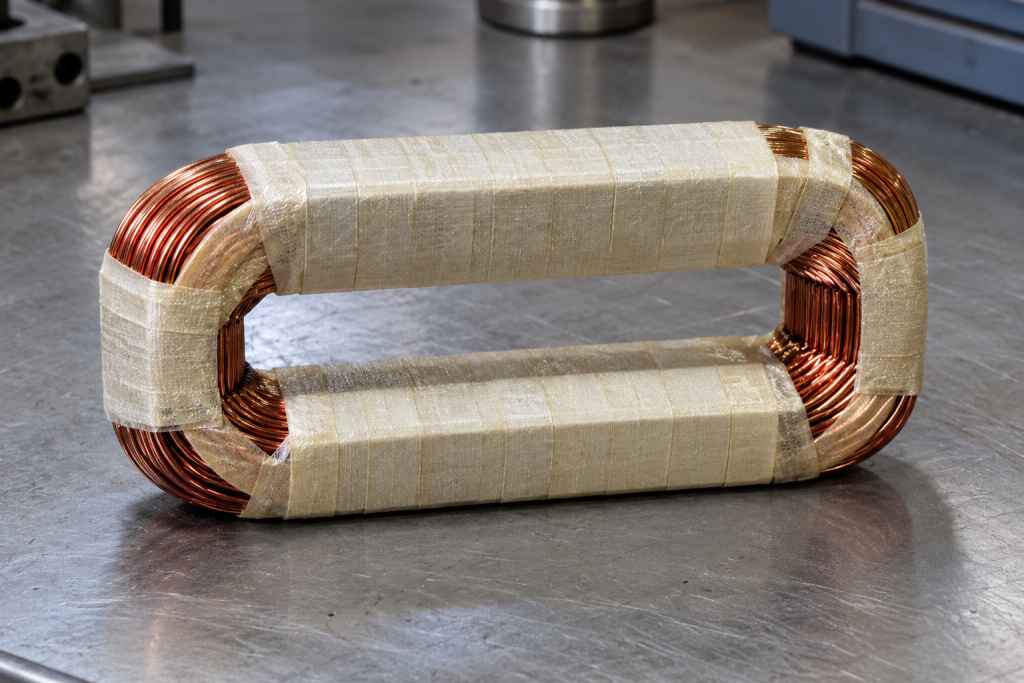
Figure 1. Illustrative form wound coil sample with mica tape insulation. The image does not establish a thermal class, voltage rating or approved insulation system.
Understand VPI motor insulation
VPI stands for vacuum pressure impregnation. In a defined VPI insulation process, the wrapped component is processed with a compatible impregnating resin and subsequently cured as specified. The selected tape needs to work with that resin and process. Low resin or low binder tape descriptions often appear in this context, but the exact meaning belongs to the grade documentation. A low percentage by itself is not a complete instruction and does not prove compatibility with any resin available in the workshop.
Ask which resin system is involved and whether the tape includes any catalyst or accelerator that affects the process. Record the approved pairing and relevant storage or handling requirements. The intended impregnation result, cured dimensions, and electrical checks are part of the component quality plan. A tape that wraps conveniently has not necessarily demonstrated those later requirements. Evaluate the material within its complete route, rather than approving it solely from the feel of an unwound strip or a nominal binder content.
Keep resin rich systems separate
Resin rich mica tapes are designed with resin already incorporated for their specified processing route. They should not be treated as the same product as a low resin tape intended for later VPI simply because both use mica paper and a carrier. The manufacturer’s instructions define the relevant handling, consolidation, and cure requirements. A change between these approaches is a system decision involving materials and equipment, not a routine substitution based on whichever reel is immediately available.
Even within one processing family, the main wall, end winding, and other insulation functions may call for different products. Do not assume one motor tape can cover every location. Identify the part of the coil and the duty assigned to the tape, then review the relevant grade. Supporting materials and interfaces matter as well. This makes the inquiry more precise and helps prevent a suitable tape for one position from being promoted as a general solution for an entire machine.

Understand the cable fire barrier role
Cable mica tape is selected as part of a cable construction intended to meet defined requirements. Commercial cable products include mica paper supported by glass cloth and bonded with a specified resin, but the exact formulation and arrangement vary. The tape’s contribution must be considered together with the conductor and other cable layers. A statement about mica’s heat resistance is useful background, yet it does not establish how a finished cable will behave during the required exposure.
Wrapping arrangement also belongs to the cable design. Overlap, tape orientation, number of passes, and subsequent processing should follow the approved specification. There is no universal overlap ratio or layer count that can be assigned to all mica cable tapes. A material change can require review of the construction and validation evidence. Do not infer that a tape with a higher advertised temperature or a similar total thickness will preserve the performance of a previously tested cable.
Fire resistance is not just a material temperature
A material temperature statement, a thermal endurance classification, flame propagation behavior, and circuit integrity during fire describe different things. For example, the IEC 60331 series includes cable tests concerned with maintaining circuit integrity under specified fire conditions; the applicable part defines its scope and procedure. This is different from merely stating that a raw material tolerates heat. Identify the required finished cable test and its conditions, rather than using the word fireproof as an undefined shorthand.
A passing result belongs to the tested cable construction and the documented test conditions. It should not be presented as a universal certificate for every cable using the same tape. If the customer asks whether a mica tape meets a cable standard, clarify whether they need a material report, a reference construction, or evidence for their own finished cable. These documents answer different questions. Preserve that distinction when preparing a quotation, technical page, or comparison with an existing supplier.

Compare mica backing and binder together
Mica identity, backing, and binder all need confirmation. Muscovite, phlogopite, and synthetic mica are names a buyer may encounter, but none selects the complete tape on its own. Confirm which product is actually proposed and the supporting technical data. Likewise, glass cloth or film identifies a carrier, not the full insulation function. A shared constituent between a motor tape and a cable tape is a reason to ask further questions, not evidence that the two products are equivalent.
Percentages need a defined basis. A resin or binder content may be reported as a mass percentage of the finished tape or in another specified way. Mica content can also be expressed using a stated mass per area. Keep units and definitions with every value. If one document reports a typical result and another an acceptance limit, mark that difference. A meaningful comparison asks whether each grade meets the application requirements instead of declaring the larger or smaller number inherently better.
Ask different questions for each inquiry
For a motor project, identify the machine component, insulation location, processing family, resin system, dimensions, and required checks. For a cable project, identify the cable construction, conductor details, required fire test, wrapping arrangement, and validation expectations. In both cases, provide an approved grade reference if replacement is the objective. The supplier can then describe a proposed product and its deviations clearly. Without this context, a quotation may be commercially complete while remaining technically impossible to assess.
Delivery details matter after the material is identified. Confirm width, reel length or mass basis, core dimensions, permitted splices, and batch traceability as appropriate. Storage instructions should be specific to the product, particularly where reactive resin is present. Do not transfer a shelf life or handling condition from one mica tape family to another. Connect the delivered reel to the approved technical description so that receiving inspection and production are using the same reference.
Ask what the report actually covers
Read the identification and scope of a report before using it in a comparison. A material data sheet, a coil system evaluation, and a finished cable fire test are different records. Check the product designation, specimen or construction description, method, and stated conditions. A document with a familiar logo or the word mica in its title may still concern a different product from the proposed reel.
Keep those records tied to the relevant specification revision. If the customer changes the tape, resin, wrapping arrangement, or cable construction, ask the responsible technical team what evidence remains applicable. The purpose is to keep a claim connected to what was actually evaluated. That is more informative than attaching several unrelated certificates to an inquiry without explaining which requirement each document supports.
Approve a system rather than a familiar name
When a substitution is proposed, separate the supplier’s comparison from the customer’s approval. A data sheet can identify relevant properties, but the responsible team must decide what review or testing the change requires. Retain the approved material, specification revision, and applicable validation record together. This avoids a similar looking reel gradually becoming an undocumented replacement. The most useful decision is supported by the actual product and application rather than by a broad claim that all mica tapes perform the same function.
Motor insulation tape and cable fire barrier tape should therefore be selected through different application questions, even when their constituents overlap. The motor process establishes how the tape works with resin and the coil system; the cable design establishes its role in the required finished cable performance. Defining those roles first makes specifications clearer and supplier discussions more productive. It also prevents a familiar material name from hiding the differences that determine whether the proposed tape is suitable.