Information Details
Youda insulation material manufacturer regularly updates insulation product information and company news to keep you informed of the latest developments and industry trends.
Stop Overpaying for Insulation: The Cost-Effective Power of Vulcanized Fiberboard
Insulation is one of the most important—and often one of the most overpriced—elements in manufacturing, construction, and product design. Whether you are building electrical components, designing industrial enclosures, or developing thermally stable parts, the true challenge is finding a material that balances cost, strength, and performance. This is where Vulcanized Fiberboard stands out.
Although it has existed for more than a century, Vulcanized Fiberboard is experiencing renewed demand as industries search for sustainable, mechanically strong, and cost-effective alternatives to synthetic materials. Instead of relying on high-priced composites or energy-intensive insulators, businesses are rediscovering the unique structural and thermal capabilities of this cellulose-based engineering material.
This article explores why companies are overspending on insulation, how Vulcanized Fiberboard provides a practical and economical solution, and which specific property makes this material uniquely powerful compared to conventional insulators.

Why Businesses Are Still Overpaying for Insulation
Insulation costs are rising for three core reasons:
1. Over-engineering and unnecessary material substitutions
Many companies default to advanced plastics, laminated composites, or fiberglass—even when the application does not require extreme heat resistance. This leads to inflated budgets and unnecessarily complex supply chains.
2. Dependence on petroleum-based insulators
Synthetic materials often carry higher production, tooling, and procurement costs. International shipping surcharges and material scarcity add even more price pressure.
3. Misconceptions about older materials
There is a belief that traditional materials like Vulcanized Fiberboard are outdated or limited in performance. In reality, modern processing techniques have elevated its capabilities far beyond what many engineers expect.
Businesses end up paying for performance they don’t actually need—missing out on a durable, stable, and highly economical alternative.
What Makes Vulcanized Fiberboard Cost-Effective?
To understand the value of Vulcanized Fiberboard, you must look beyond the general idea of insulation and focus on one defining characteristic:
Exceptional Mechanical Strength-to-Cost Ratio
While many insulation materials focus solely on thermal performance, Vulcanized Fiberboard adds another critical component: structural integrity at a fraction of the cost of engineered plastics or composites.
This combination—insulation + mechanical performance—is what enables dramatic cost savings across manufacturing, installation, and lifecycle durability.
Let’s break down this distinctive advantage.
The Unique Mechanical Structure Behind Its Performance
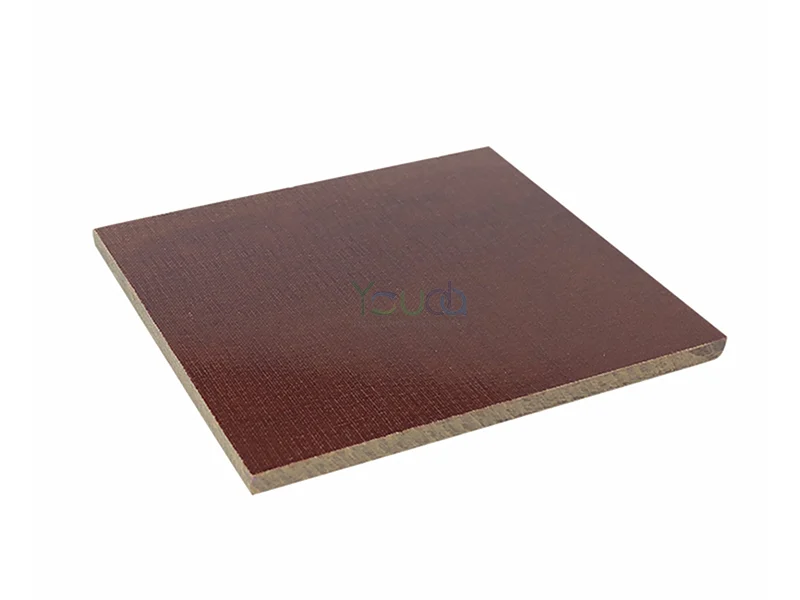
Vulcanized Fiberboard is produced by chemically bonding cellulose fibers into a unified, solid, homogeneous sheet—without using resins, adhesives, or plastics. The result is a dense, leather-like engineering material with impressive tensile, shear, and impact strength.
Its mechanical integrity stems from:
1. Fully integrated fiber bonding
Unlike paper laminates, which layer sheets together, Vulcanized Fiberboard forms a continuous fiber matrix. This eliminates delamination failures common in resin-based or multi-layer materials.
2. High density with low weight
The fibers compress into a tough but lightweight core. This creates excellent stiffness without the mass penalty of solid plastics or metal components.
3. Inherent resistance to cracking and chipping
Industrial environments demand materials that withstand repetitive mechanical stress. Vulcanized Fiberboard absorbs impact rather than fracturing, offering long-term reliability.
4. Dimensional stability under thermal load
Its natural cellulose structure expands predictably under heat, avoiding warping, bending, or thermal deformation that can occur with low-grade plastics.
This extraordinary strength profile dramatically expands its use cases while keeping costs significantly lower than engineered alternatives.
How Mechanical Strength Translates to Real Cost Savings
The mechanical performance embedded within Vulcanized Fiberboard results in savings in four critical areas:
1. Reduced material volume
Because the material is naturally strong, manufacturers can often reduce thickness without compromising rigidity or insulation. Less material equals lower cost per part.
2. Fewer failures and replacements
Components made with Vulcanized Fiberboard last longer, lowering maintenance costs—especially in electrically insulated housings, protective barriers, and industrial panels.
3. Faster machining and customization
It cuts cleanly using standard tooling, without chipping or melting like plastics. This reduces production time, tool wear, and labor costs.
4. Lightweight strength reduces logistics costs
Shipping and installation become more economical due to reduced mass compared to metal or dense composites.
When calculating both upfront and lifecycle expenses, Vulcanized Fiberboard consistently outperforms many modern insulation materials in value.
Thermal and Electrical Performance That Matches or Exceeds Expectations
Businesses often assume that a cellulose-based material cannot deliver reliable thermal stability. The opposite is true.
Vulcanized Fiberboard offers:
Reliable thermal resistance for moderate to high-temperature applications
Excellent electrical insulation properties
Low thermal conductivity
Consistency in heat-stable environments
Resistance to arc tracking and dielectric breakdown
This makes it ideal for industries such as:
Electrical equipment
Renewable energy components
Industrial insulation
Automotive and EV systems
Appliance manufacturing
Tooling support structures
Aerospace interiors
Packaging for heat-sensitive components
Its combined thermal + mechanical capabilities create a versatile solution that can replace more expensive engineered materials in numerous applications.
A Sustainable Insulation Material Without Premium Pricing
Sustainability pressures are increasing globally. Many companies want environmentally responsible insulation but balk at the price tags of bio-based composites.
Vulcanized Fiberboard delivers sustainability without the premium:
Made from renewable cellulose fibers
Requires less energy to produce than synthetic plastics
Contains no resins, formaldehyde, petroleum, or toxic additives
Biodegradable under industrial conditions
Generates minimal waste during machining
This makes it a rare example of a material that is both eco-friendly and affordable, avoiding the high markup associated with green alternatives.
Why You Should Reconsider Your Insulation Choices
If you are paying for fiberglass, engineered plastics, or high-performance composites, it is worth analyzing whether your application genuinely requires those materials. In many cases, Vulcanized Fiberboard offers the same—or better—functional performance with lower total costs.
Companies choose it because it’s:
Strong
Thermally stable
Electrically reliable
Lightweight
Easy to machine
Cost-effective
Environmentally sustainable
Yet its biggest advantage, the one that deserves the most attention, remains its mechanical strength-to-cost ratio. This single characteristic enables it to replace multiple material categories while introducing significant financial savings.
Applications Where Vulcanized Fiberboard Excels
Here are specific scenarios where its distinctive performance shines:
Electrical and power systems
Insulating barriers
Phase insulation
Transformer components
Switchgear partitions
Industrial and mechanical systems
Structural supports exposed to moderate heat
Protective covers and housings
Spacer materials
Transportation and automotive
Heat shields
EV battery supports
Interior structural panels
Consumer appliances
Motor insulation
Heat-resistant internal components
Tooling and manufacturing
Jigs, fixtures, and templates
Machinable insulating plates
In each case, mechanical toughness paired with dependable thermal performance reduces material spending without compromising reliability.
Conclusion: Stop Overpaying—Start Leveraging Vulcanized Fiberboard
The cost-effective power of Vulcanized Fiberboard comes from one defining characteristic: an exceptional mechanical strength-to-cost ratio that synthetic insulators struggle to match.
As companies seek durable, sustainable, and affordable insulation materials, Vulcanized Fiberboard offers a proven, high-performance alternative that aligns with modern engineering and economic expectations.
By choosing this material, manufacturers can:
Reduce unnecessary overspending
Improve structural and thermal performance
Streamline machining and production
Enhance sustainability
Extend the lifespan of insulated components
If your insulation needs do not demand extreme-temperature composites, you may be paying more than necessary. Vulcanized Fiberboard provides a balanced, cost-effective, and reliable solution—without compromising quality or engineering integrity.
★★★ Recommended Reading:
The Ultimate Guide to Choosing the Right Vulcanized Fiber Sheet for Your Application
If you need detailed information about related products, you can let me know via online chat, email, WhatsApp, or any other method, and we will contact you on the same day to solve your problem.