Information Details
Youda insulation material manufacturer regularly updates insulation product information and company news to keep you informed of the latest developments and industry trends.
Top 10 Advantages of Using G10 Fiberglass Sheet in Industry
Introduction
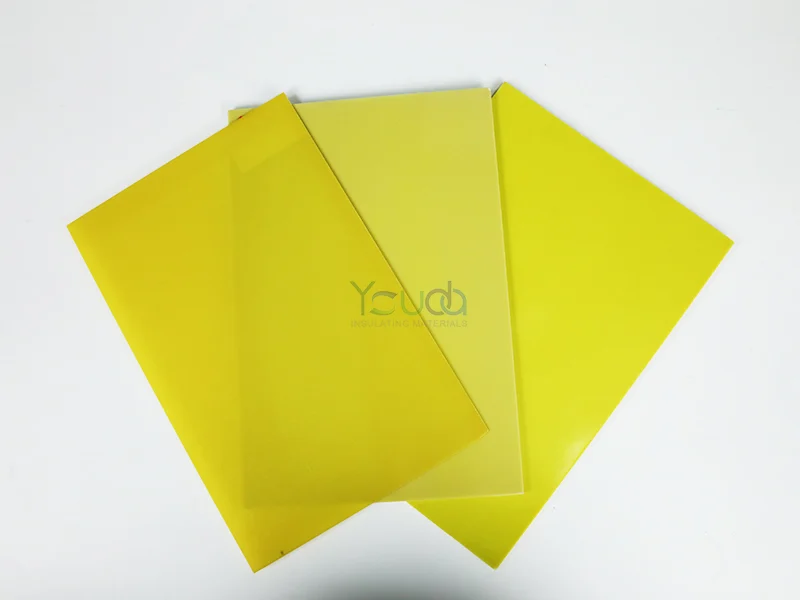
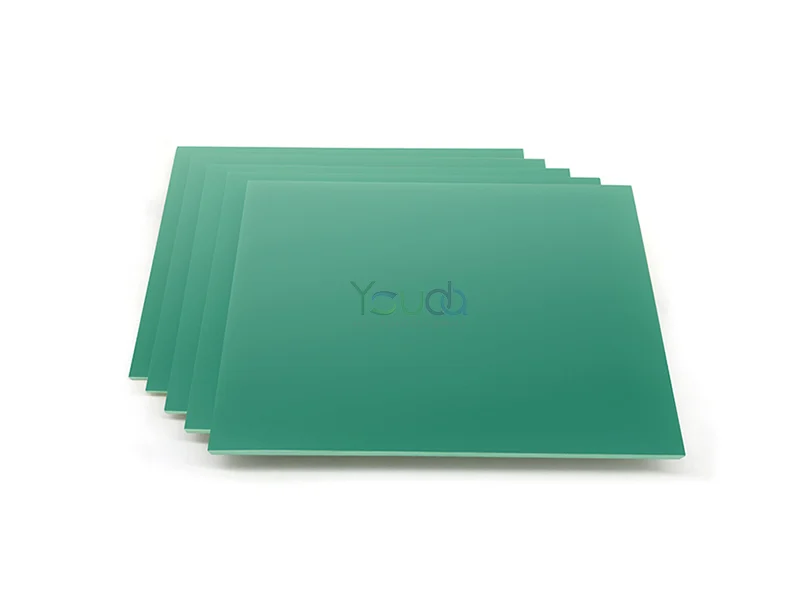
In industrial settings where reliability, strength, and safety are non-negotiable, G10 fiberglass sheet has become a material of choice. Built from woven fiberglass cloth impregnated with epoxy resin, it undergoes high pressure and heat curing to form a dense, high-performance laminate. While many materials claim strength or insulation, G10 is one of the rare composites that balances mechanical durability, electrical resistance, and chemical stability all in one sheet.
This article explores the top 10 advantages of using G10 fiberglass sheet in industry, showing why it continues to dominate applications from aerospace to electronics.

- 1. Exceptional Mechanical Strength
One of the core G10 fiberglass sheet advantages is its outstanding strength-to-weight ratio. Unlike metals, G10 delivers impressive tensile, compressive, and impact strength without adding excessive mass. This makes it an ideal high-strength insulating material for industries where both durability and lightness are essential.
- 2. Superior Electrical Insulation
G10 is widely used in switchgear, transformers, and motor insulation systems because it is a void-free insulating laminate. Its high dielectric strength ensures reliable performance even under high voltage, making it one of the most trusted industrial applications of G10 laminate.
- 3. Excellent Dimensional Stability
Even when exposed to machining, heat, or vibration, G10 maintains its geometry. G10 sheet dimensional stability is particularly valuable in CNC machining of precision components, where tight tolerances are required.
- 4. Resistance to Moisture and Humidity
Moisture absorption is a common weakness in many composite materials. G10 resists water penetration and retains insulation performance in damp conditions, which explains why it is used in marine and underwater applications of G10 fiberglass sheets.
- 5. Chemical and Corrosion Resistance
G10’s epoxy-fiberglass structure resists acids, alkalis, and industrial solvents. Unlike metals, it will not rust or corrode, making it a reliable choice in chemical plants and harsh processing environments.
- 6. High Thermal Resistance
With a well-controlled epoxy curing temperature profile, G10 retains strength and insulation even under elevated temperatures. Its stability under thermal stress makes it suitable for environments ranging from aerospace engines to heavy electrical machinery.
- 7. Machinability and Versatility
Despite its hardness, G10 can be machined into intricate shapes using CNC or waterjet cutting. This allows manufacturers to produce custom components—from spacers to insulating fixtures—without compromising material integrity.
- 8. Cost-Effectiveness in Long-Term Use
While G10 may initially cost more than basic plastics, its durability reduces replacement cycles. In critical systems, fewer failures and less downtime translate into significant long-term savings.
- 9. Fire and Flame Resistance
Another critical advantage of G10 fiberglass sheet is its inherent flame resistance. It self-extinguishes when exposed to flame, reducing fire hazards in sensitive environments such as electrical cabinets and aircraft interiors.
- 10. Proven Multi-Industry Applications
From aerospace to electronics, marine engineering to energy systems, G10’s adaptability is unmatched. Its unique combination of strength, insulation, and chemical resistance makes it one of the most versatile engineering laminates in the world.
- G10 vs Other Industrial Materials
◆ G10 vs FR4 Differences
FR4 is another fiberglass epoxy laminate, but it contains a flame-retardant additive that makes it better for printed circuit boards (PCBs). However, when it comes to mechanical strength and industrial applications, G10 outperforms FR4 because it is denser, more impact-resistant, and better suited for structural parts. In short, FR4 is optimized for electronics, while G10 excels in both mechanical and electrical engineering.
◆ G10 vs Metal in Industry
Metals such as aluminum and steel provide excellent strength but are heavy, conductive, and prone to corrosion. In contrast, G10 vs metal in industry shows clear advantages: G10 is lightweight, non-conductive, corrosion-resistant, and easier to machine for insulating components. For applications where electrical insulation is critical, G10 is the superior choice.
◆ G10 vs Plastic Composites
Standard plastics like nylon or PVC are cheaper but lack the strength, heat resistance, and dielectric properties of G10. G10 vs plastic composites highlights a tradeoff: while plastics are flexible and low-cost, G10 offers industrial-grade reliability in demanding environments.
- Use Cases / Real-World Applications
◆ Aerospace Applications of G10 Fiberglass
In aerospace engineering, G10 is trusted for interior panels, structural spacers, and flame-resistant insulation. Its lightweight yet strong profile makes it superior to metals in reducing aircraft weight while maintaining safety.
◆ G10 in Electrical Insulation Systems
Switchgear, transformers, and high-voltage motors rely on G10 for its dielectric strength and void-free insulation. Compared to plastics or metals, G10 provides superior reliability under long-term electrical stress.
◆ Marine Engineering with G10 Sheets
G10 fiberglass sheet is often used in marine engineering for underwater housings, insulation plates, and anti-corrosion components. Its resistance to moisture and chemicals ensures performance even in saltwater environments.
◆ G10 in Energy and Power Systems
From wind turbine spacers to insulating components in power plants, G10 provides thermal stability and mechanical strength that metals or plastics cannot match. This makes it invaluable in renewable and traditional energy industries.
◆ Industrial Machinery and Automation
CNC machines, robotic systems, and heavy equipment often incorporate G10 as precision insulating spacers and wear-resistant parts. Its combination of dimensional stability and machinability ensures consistent performance.
- Conclusion
The top 10 advantages of G10 fiberglass sheet demonstrate why it remains an indispensable material in industrial engineering. Beyond strength, insulation, and chemical resistance, real-world applications show how G10 outperforms FR4, metals, and plastics in demanding environments.
Whether in aerospace, marine engineering, or power systems, G10 stands as a high-strength insulating material trusted by engineers where failure is not an option.
- Frequently Asked Questions (FAQ)
Q1: Is G10 always better than FR4?
Not always. FR4 is cost-effective and flame-retardant, making it ideal for PCBs, while G10 is better for structural and insulating applications requiring higher mechanical strength.
Q2: Why would I choose G10 over metals?
Because G10 is lighter, corrosion-resistant, and electrically insulating, unlike metals which conduct electricity and corrode.
Q3: Is G10 stronger than plastics?
Yes. Compared to standard plastics, G10 offers superior mechanical strength, thermal resistance, and insulation properties.
Q4: What industries benefit most from G10?
Electronics, aerospace, marine, automotive, and energy sectors rely heavily on G10 for its versatility.
★ Recommended Reading:
G10 Fiberglass Sheet Specifications: Everything You Should Check Before Purchase
If you need detailed information about related products, you can let me know via online chat, email, WhatsApp, or any other method, and we will contact you on the same day to solve your problem.