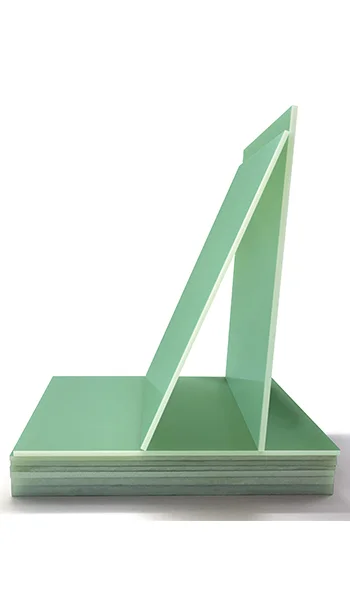
Why Did the Same 1,000 kg of FR4 Cost More When Cut into Small Sizes?
The material weight was unchanged, but the order was no longer only a material order
Reader note The customer and company are anonymized. The project sequence is reconstructed from common FR4 quotation and cutting work. Images are editorial recreations.
The buyer compared kilograms; the factory had to compare sheets
An overseas equipment manufacturer asked us to quote 1,000 kg of yellow FR4. A previous order for the same grade and thickness had been supplied as full sheets, so the buyer expected the same price per kilogram. This time, however, the purchase list contained more than twenty small rectangular sizes, each with a different quantity.
When the quotation arrived, the unit price was higher. The buyer’s first response was direct: the material was still FR4 and the total weight was still 1,000 kg, so why should smaller pieces cost more?
The FR4 resin, glass cloth and sheet-production cost had not changed. What changed was the amount of standard sheet required to deliver 1,000 kg of accepted parts, plus the cutting, measurement, sorting, labeling and packaging work behind those parts.

One tonne of finished parts can consume more than one tonne of sheet
Full sheets are easy to calculate: almost every kilogram produced can be shipped. Small parts are different. Saw kerf, edge trimming, gaps between parts and leftover shapes all reduce the yield. If an order requires exactly 1,000 kg of accepted pieces, the factory may need to start with considerably more than 1,000 kg of standard sheets.
The customer’s original list made the problem worse. Several dimensions differed by only a few millimeters, but because every dimension was fixed, the strips could not share a common cutting width. Large unused bands appeared between groups, while some remainders were too narrow for the next size.
Processing work also multiplied. A pallet of full sheets needs a limited number of checks. Twenty small sizes require separate setup, repeated measurement, quantity control, identification and protection so that similar-looking parts do not reach the wrong assembly line.
We did not ask the customer to accept the first expensive layout
We converted the complete purchase list into a mixed nesting plan. Different sizes were placed on the same standard sheet rather than calculated as isolated items. Parts were rotated where direction did not affect performance, and common widths were grouped to reduce repeated trimming.
We then marked three dimensions that caused disproportionate waste and asked whether each could be adjusted within the customer’s assembly tolerance. The customer approved small changes to two non-critical dimensions and combined two nearby widths into one standard size.

| Cost item | Full sheets | Many small sizes | How to reduce the difference |
|---|---|---|---|
| Material yield | Most sheet area is saleable | Kerf and unusable gaps reduce yield | Mixed nesting and shared dimensions |
| Cutting work | Few large cuts | Many starts, stops and measurements | Group parts by thickness and width |
| Sorting | One grade and size | Multiple sizes and quantities must be separated | Use a clear size code and packing list |
| Packaging | Simple pallet protection | Bundles need labels, separators and counting | Standardize bundle quantities |
| Offcuts | Large remainder stays usable | Irregular pieces may have no destination | Return, reuse or plan future parts into offcuts |
* Final selection must follow the agreed grade, thickness, flame test scope, certification documents and end-use conditions.
Reusable offcuts were treated as material, not automatically as scrap
The optimized layout still produced offcuts. We separated larger reusable pieces from narrow trimming waste. The reusable pieces were recorded by size and reserved for the customer’s future sample parts and smaller repeat items. Where the customer preferred, they could also be packed and shipped with the order.
Before shipment, each finished size was measured, counted, bundled and labeled separately. The packing list matched the size codes, preventing the customer’s warehouse from opening every bundle to identify similar parts.

The final saving came from changing the cutting plan, not hiding the processing cost
After mixed nesting and the approved dimension adjustments, whole-sheet utilization improved and fewer standard sheets were needed. The revised quotation remained higher than a full-sheet price per kilogram because the cutting and packing work still existed, but it was lower and easier to explain than the first isolated-size calculation.
We can supply FR4 as full sheets, custom-size blanks or finished parts. Available services include cutting, drilling, punching, slotting, countersinking, threaded inserts and CNC machining. For multi-size orders, a complete drawing list allows us to optimize all parts together before confirming the final price.
When comparing FR4 quotations, ask whether the quoted kilogram is raw sheet weight or accepted finished-part weight, what utilization rate was used, who owns the offcuts and how many separate sizes must be packed. The same 1,000 kg can represent two very different manufacturing jobs.
这是示例文本,单击 “编辑” 按钮更改此文本。