Information Details
Youda insulation material manufacturer regularly updates insulation product information and company news to keep you informed of the latest developments and industry trends.
Frequently Asked Questions (FAQ) About Bakelite Sheet
A Bakelite Sheet is more than just another industrial laminate — it represents one of the earliest yet most reliable thermosetting materials ever engineered. In this FAQ, we will go beyond the typical introduction and focus on a defining characteristic of the Bakelite Sheet: its exceptional electrical insulation performance. This article answers the most common technical and practical questions while revealing why this material remains relevant for modern electrical and mechanical design.

1. What Exactly Is a Bakelite Sheet?
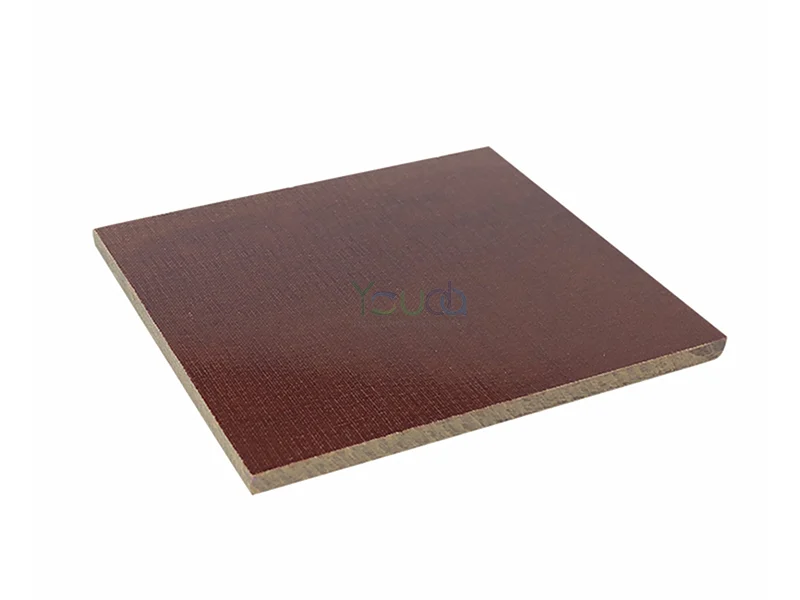
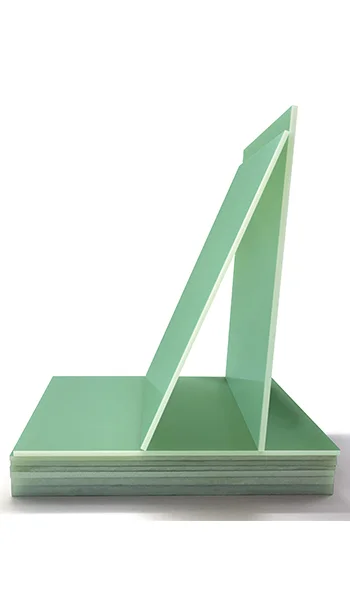
A Bakelite Sheet is a thermosetting laminate made by impregnating layers of paper, cotton cloth, or glass fabric with phenol-formaldehyde resin. These layers are then pressed under heat to form a dense, rigid sheet. Once cured, it cannot be remelted or reshaped, which gives it outstanding dimensional stability and heat resistance.
Unlike many thermoplastics that soften under heat, a Bakelite Sheet remains hard and stable. This unique structure makes it a top choice for applications where strength, insulation, and thermal endurance are essential.
2. Why Is the Electrical Insulation Property So Important?
Electrical insulation defines the true value of a Bakelite Sheet. The material’s dense molecular cross-linking blocks electrical conduction even at elevated temperatures. In industrial settings, where power systems demand insulation stability, a Bakelite Sheet provides a critical safeguard.
The insulation advantage comes from three core features:
High dielectric strength – it can withstand thousands of volts per millimeter without breakdown.
Excellent volume resistivity – electric current cannot easily pass through the material’s body.
Surface resistance stability – even when exposed to humidity, its surface resistivity remains reliable.
This combination makes a Bakelite Sheet a consistent performer in electrical boards, transformer spacers, and control panels.
3. How Does a Bakelite Sheet Achieve Its Insulating Ability?
The insulation capability of a Bakelite Sheet is the result of its chemistry and structure. When phenolic resin polymerizes under heat, it forms a rigid three-dimensional molecular network. This network prevents free electron flow, resulting in high electrical resistance.
In addition, the reinforcement layer — whether paper or fabric — strengthens the resin structure and reduces microscopic voids that could cause electrical leakage. The final result is a composite that maintains its insulation even under pressure, heat, and mechanical load.
4. What Grades of Bakelite Sheet Are Available?
Not all Bakelite Sheets are identical. They differ based on the type of reinforcement used:
Paper-based Bakelite Sheet: Light, cost-efficient, and ideal for low to medium electrical insulation uses such as terminal boards and switches.
Cloth-based Bakelite Sheet: Offers higher mechanical strength and improved machinability. Common in jigs, fixtures, and motor insulation parts.
Glass-cloth Bakelite Sheet: Superior in both thermal and electrical performance; used for high-voltage or high-temperature environments.
Selecting the correct grade is critical. For pure insulation, paper-based grades often suffice. For combined mechanical and electrical performance, cloth-based or glass-based Bakelite Sheets are better suited.
5. What Are the Key Electrical Properties of Bakelite Sheet?
The following characteristics define the electrical performance of a Bakelite Sheet:
Dielectric strength: Typically ranges from 2.5 – 4 kV/mm, depending on thickness and grade.
Volume resistivity: Generally exceeds 10⁹ Ω·m, providing excellent resistance to electrical flow.
Surface resistivity: Can reach 10¹⁰ Ω or more, ensuring strong insulation at the surface.
Operating temperature: Many grades perform reliably up to 150 °C without losing electrical integrity.
These values may vary slightly among manufacturers, but they consistently demonstrate why Bakelite Sheet remains a benchmark for electrical insulation.
6. Where Does Bakelite Sheet Excel in Practical Applications?
The Bakelite Sheet is trusted in environments that combine heat, mechanical stress, and electrical load. Some common applications include:
Switchgear panels and circuit boards
Electrical insulation plates and spacers
Transformer and motor components
Tooling jigs and mechanical supports requiring insulation
Automotive electrical housings and battery systems
Its ability to insulate and endure thermal stress simultaneously makes it invaluable in safety-critical designs.
7. How Does Temperature Affect Its Insulating Behavior?
Temperature plays a major role in insulation materials. In many plastics, conductivity increases as heat rises. The Bakelite Sheet, however, maintains its insulating structure up to high temperatures due to its thermoset nature.
While most thermoplastics soften around 100 °C, Bakelite can resist deformation and maintain dielectric strength up to about 150 °C. This allows it to serve as a stable insulating barrier even in heated electrical enclosures or motor housings.
8. How Moisture-Resistant Is a Bakelite Sheet?
Moisture absorption can reduce insulation in some materials. A Bakelite Sheet offers moderate resistance to humidity, especially in cloth-reinforced or glass-reinforced grades. Paper-based types may absorb limited moisture, but the cross-linked resin minimizes conductivity increase.
In humid industrial areas, surface sealing or varnishing can further protect the sheet and maintain insulation stability. This makes Bakelite Sheet suitable for a wide range of climates and installations.
9. What Mechanical Advantages Complement Its Electrical Performance?
In addition to insulation, a Bakelite Sheet provides mechanical rigidity and machinability. It can be cut, drilled, and tapped with precision — a rare quality among insulating materials. These properties allow it to function as both a structural support and electrical barrier, reducing the need for multiple components.
The balance between stiffness and machinability gives engineers flexibility in part design, especially for mounting panels, support brackets, and insulating barriers.
10. What Are the Limitations of Bakelite Sheet?
While the Bakelite Sheet excels in insulation and stability, certain limitations must be acknowledged:
Brittleness – under heavy impact, it may crack rather than deform.
UV Sensitivity – prolonged sunlight can discolor or slightly degrade the surface.
Limited recyclability – as a thermoset material, it cannot be remelted or reshaped.
Moisture absorption – certain grades may require protective coating in damp environments.
Recognizing these limits ensures that the Bakelite Sheet is used in the right context — primarily in enclosed or controlled environments where its strengths can shine.
11. How Does Bakelite Sheet Compare to Modern Plastics?
Modern engineering plastics like epoxy glass (FR-4), PEEK, or PPS offer impressive properties, yet Bakelite Sheet continues to hold a strong position due to its unique combination of affordability, mechanical strength, and consistent insulation performance.
Its lower thermal expansion and rigidity make it more dimensionally stable under load than many thermoplastics. While advanced polymers may outperform in niche areas, the Bakelite Sheet remains an ideal choice for cost-effective, high-insulation applications.
12. How Should One Specify a Bakelite Sheet for an Insulating Application?
When insulation is your main concern, proper specification ensures long-term performance. Consider the following:
Voltage requirements – define the breakdown voltage needed.
Temperature exposure – specify the maximum operating temperature.
Humidity conditions – select a reinforcement type accordingly.
Mechanical needs – determine if machining or load-bearing is necessary.
Thickness and tolerance – match the insulation gap or clearance.
For example: Bakelite Sheet, 3 mm thick, cloth-reinforced, dielectric strength ≥ 3 kV/mm, temperature rating 150 °C.
Such precision avoids under-specification and ensures reliability.
13. Is Bakelite Sheet Still Relevant in 2025?
Absolutely. Despite being a century-old material, Bakelite Sheet remains a backbone of industrial insulation. Continuous process improvements have refined its strength, heat resistance, and uniformity. In 2025, it continues to appear in modern manufacturing, energy distribution, and automotive sectors.
Its proven reliability, combined with cost efficiency and sustainability through long service life, ensures its ongoing relevance in engineering design.
14. Quick FAQs
Q1: Can Bakelite Sheet be machined easily?
Yes. It can be cut, drilled, and milled with standard tools, provided cooling and support are used to prevent cracking.
Q2: Does thickness affect insulation?
Yes. Thicker sheets offer higher voltage endurance, but dielectric strength (kV/mm) remains a better indicator of insulation quality.
Q3: Can Bakelite Sheet withstand direct flame?
Phenolic resin resists ignition better than many plastics and tends to char rather than melt, offering basic flame retardancy.
Q4: Is it suitable for outdoor use?
While possible, outdoor exposure requires surface protection from UV and moisture for long-term stability.
15. Summary
The Bakelite Sheet is not just a historical material — it’s a modern solution for reliable, high-voltage insulation. Its dense thermoset structure, impressive dielectric strength, and mechanical rigidity make it ideal for electrical and industrial environments where safety and stability are non-negotiable.
By focusing on its insulating ability under heat, pressure, and load, we understand why the Bakelite Sheet continues to be a trusted component in electrical, automotive, and mechanical engineering. It remains a prime example of how classic materials can still outperform in modern applications.
★★★ Recommended Reading:
Technical Data of Bakelite Sheet: Properties and Standards
If you need detailed information about related products, you can let me know via online chat, email, WhatsApp, or any other method, and we will contact you on the same day to solve your problem.