Information Details
Youda insulation material manufacturer regularly updates insulation product information and company news to keep you informed of the latest developments and industry trends.
Top 10 Applications of Bakelite Sheet in Electrical Industry
In the ever-evolving landscape of electrical engineering materials, few substances have withstood the test of time like Bakelite sheet. First synthesized over a century ago, this thermosetting phenolic resin continues to play a critical role in modern electrical systems—not as a nostalgic relic, but as a high-performance engineered material tailored for specific functional demands. While many assume its relevance has waned in the age of advanced polymers and composites, the reality is that Bakelite sheet occupies irreplaceable niches where thermal stability, dielectric strength, and mechanical resilience converge under extreme conditions.
This article explores ten specialized applications of Bakelite sheet in the electrical industry, moving beyond generic descriptions to highlight how its molecular architecture and manufacturing precision enable solutions that newer materials often cannot replicate. Rather than rehashing textbook definitions, we delve into the nuanced engineering rationale behind its continued use—focusing particularly on its unmatched arc resistance and structural integrity under thermal cycling.
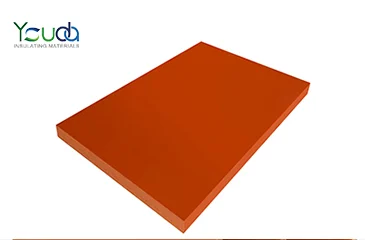
1. High-Voltage Insulating Barriers in Switchgear
Modern switchgear operates under voltages exceeding 36 kV, where even minor insulation failure can trigger catastrophic arcs. Bakelite sheet is uniquely suited here due to its exceptional arc resistance—rated among the highest in thermoset materials. Unlike many thermoplastics that melt or drip when exposed to electric arcs, Bakelite sheet chars without conducting, effectively containing fault energy. This property makes it ideal for phase barriers, busbar supports, and interphase insulation in medium- and high-voltage switchboards, especially in legacy infrastructure retrofits where dimensional stability and compatibility with existing hardware are paramount.
2. Terminal Blocks and Junction Boxes
In industrial control panels, terminal blocks must endure continuous current loads, vibration, and occasional short-circuit surges. Bakelite sheet provides a rigid, non-hygroscopic base that resists tracking—a critical factor in humid or contaminated environments. Its low moisture absorption (<0.5% per ASTM D570) ensures consistent dielectric properties over decades, unlike some composite alternatives that degrade when exposed to condensation or chemical vapors. Engineers specify Bakelite sheet for heavy-duty terminal strips not out of tradition, but because its creep resistance under load prevents loosening of clamping mechanisms over time.
3. Arc Chutes in Circuit Breakers
One of the most demanding roles for any insulating material is within the arc chute of a molded-case circuit breaker (MCCB). Here, Bakelite sheet is machined into segmented plates that split, cool, and extinguish arcs during interruption events. The key lies in its ability to withstand repeated plasma exposure without significant erosion. Newer ceramics may offer higher temperature tolerance, but they lack the machinability and impact resistance required for mass-produced, cost-sensitive breakers. Bakelite sheet, by contrast, balances performance, manufacturability, and lifecycle cost—making it a silent guardian in millions of protection devices worldwide.
4. Transformer Coil Formers and Bobbins
While epoxy resins dominate in new transformer designs, Bakelite sheet remains prevalent in dry-type distribution transformers, especially those deployed in harsh industrial settings. Its coefficient of thermal expansion closely matches copper windings, minimizing mechanical stress during thermal cycling. Moreover, Bakelite sheet does not outgas volatile compounds under prolonged heating, preserving winding insulation integrity. In retrofit scenarios or custom-built units requiring rapid prototyping, its ease of CNC machining allows for precise coil formers that maintain concentricity—critical for minimizing leakage inductance.
5. Motor End Bells and Brush Holders in DC Machines
In brushed DC motors used in elevators, cranes, and traction systems, brush holders must be both electrically insulating and mechanically robust. Bakelite sheet excels here due to its wear resistance against carbon brush abrasion and its ability to dissipate static charges without surface tracking. Unlike glass-filled nylons, which can develop microcracks under cyclic thermal stress, Bakelite sheet maintains structural coherence even after years of operation at 120°C ambient temperatures. This durability translates directly into reduced maintenance intervals and enhanced operational safety.
6. Insulating Washers and Spacers in Power Electronics
High-power semiconductor modules (e.g., IGBT stacks) require insulating spacers that combine high dielectric strength with thermal conductivity. While pure Bakelite sheet isn’t thermally conductive, modified grades filled with mica or alumina offer a balanced solution. These hybrid Bakelite sheet variants provide >20 kV/mm breakdown voltage while allowing modest heat transfer away from junctions. More importantly, they resist partial discharge degradation—a silent killer in high-frequency inverters—where air pockets in inferior laminates would ionize and erode over time.
7. Control Panel Backplates and Mounting Boards
Industrial control cabinets demand mounting substrates that won’t warp, crack, or support flame propagation. Bakelite sheet meets UL 94 V-0 flammability standards inherently, without halogenated additives. Its rigidity ensures that DIN rails and component brackets remain aligned despite repeated door openings, vibrations, or accidental impacts. Crucially, its surface resistivity remains stable across wide humidity ranges, preventing stray leakage currents that could interfere with sensitive PLC inputs—an often-overlooked advantage in tropical or marine installations.
8. Insulated Handles for Live-Line Tools
Utility workers performing live maintenance rely on tools with handles made from materials that guarantee dielectric integrity at primary distribution voltages (up to 35 kV). Bakelite sheet, when compression-molded into ergonomic forms, offers superior grip, impact resistance, and arc-quenching capability. Unlike fiberglass-reinforced epoxy, which can delaminate under mechanical shock, Bakelite sheet is homogeneous—eliminating internal pathways for moisture ingress or electrical tracking. Regulatory bodies in several countries still list Bakelite-based handles as compliant for Class 00 to Class 4 insulated tools.
9. Relay Bases and Socket Insulators
Electromechanical relays in railway signaling, mining controls, and emergency shutdown systems operate in environments where failure is not an option. Bakelite sheet provides the dimensional stability needed to maintain precise contact alignment over thousands of cycles. Its low cold-flow characteristics prevent socket deformation under spring pressure, ensuring consistent contact force. Additionally, its resistance to ozone—generated by arcing contacts—prevents surface embrittlement, a common failure mode in polyamide-based sockets.
10. Custom Insulating Components in Legacy Equipment
Perhaps the most underappreciated application lies in maintaining aging electrical infrastructure. Nuclear plants, hydroelectric stations, and vintage industrial machinery often contain components no longer in production. Reverse-engineering these parts demands materials with known long-term behavior. Bakelite sheet fills this gap perfectly: its decades-long service history provides predictable aging models, and its machinability allows fabricators to produce one-off replacements that match original specifications exactly—down to the grain orientation in layered grades.
Why Bakelite Sheet Endures: The Arc Resistance Advantage
While many articles cite general properties like “good insulation” or “heat resistance,” the true differentiator of Bakelite sheet in electrical applications is its arc resistance—a metric quantified by standards like ASTM D495. Under high-voltage arcing, most polymers either melt (thermoplastics) or erode rapidly (some thermosets). Bakelite sheet, however, undergoes controlled carbonization that forms a non-conductive char layer, effectively self-extinguishing the arc path. This behavior is not merely a safety feature; it’s a functional requirement in fault-current interruption systems.
Moreover, modern Bakelite sheet is not the same material used in early 20th-century radios. Today’s formulations incorporate refined phenolic resins, optimized filler ratios (e.g., cellulose, cotton, or synthetic fibers), and post-curing processes that enhance cross-linking density. The result is a material with tighter tolerances, improved mechanical consistency, and compliance with RoHS and REACH regulations—debunking the myth that it’s an obsolete, toxic substance.
Conclusion
The persistence of Bakelite sheet in the electrical industry isn’t nostalgia—it’s engineering pragmatism. In an era obsessed with “next-gen” materials, Bakelite sheet proves that performance isn’t always about novelty, but about solving specific problems with reliability, predictability, and cost-effectiveness. From arc chutes to legacy retrofits, its applications reflect a deep understanding of real-world electrical stresses that theoretical material comparisons often overlook.
For designers, specifying Bakelite sheet isn’t settling for less; it’s choosing a proven solution where failure margins are non-negotiable. As long as electrical systems demand materials that perform under fire—literally and figuratively—Bakelite sheet will remain not just relevant, but essential.
★★★ Recommended Reading:
Frequently Asked Questions (FAQ) About Bakelite Sheet
If you need detailed information about related products, you can let me know via online chat, email, WhatsApp, or any other method, and we will contact you on the same day to solve your problem.