Information Details
Youda insulation material manufacturer regularly updates insulation product information and company news to keep you informed of the latest developments and industry trends.
Top 10 Industrial Applications of FR4 Fiberglass Sheets in 2025
Market Dynamics: FR4 Fiberglass Sheet Supply Chain Under Pressure
Global demand for FR4 Fiberglass Sheet has surged in early 2025, triggering a 12–18% price increase across major markets since Q4 2024. This tightening stems primarily from dual pressures: constrained availability of brominated epoxy resins—a key flame-retardant component—and heightened procurement from EV and 5G infrastructure sectors. With lead times now stretching beyond 10 weeks in some regions, engineering and procurement teams are strongly advised to audit their material dependencies and secure strategic inventory positions before Q2 shortages intensify.
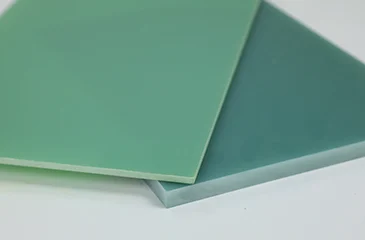
Top 10 Industrial Applications of FR4 Fiberglass Sheets in 2025
As supply volatility reshapes material planning, understanding why FR4 remains irreplaceable—even under cost pressure—is critical. Beyond its traditional role in printed circuit boards (PCBs), the 2025 industrial landscape reveals increasingly sophisticated deployments of FR4 Fiberglass Sheet, driven by its unique balance of dielectric stability, mechanical rigidity, and thermal resilience. This article explores ten high-impact applications where FR4’s engineered properties solve real-world engineering challenges—particularly in environments demanding reliability under electrical stress, thermal cycling, or dimensional precision.
1. High-Voltage Insulation Barriers in EV Power Electronics
Electric vehicle inverters and onboard chargers operate at 800V+ architectures, demanding insulation materials that resist partial discharge and tracking. FR4 Fiberglass Sheet excels here due to its UL94 V-0 flammability rating and consistent dielectric strength (~20 kV/mm). Unlike cheaper phenolic laminates, FR4 maintains structural integrity during rapid thermal transients—critical when switching frequencies exceed 20 kHz in SiC-based systems. In 2025, Tier-1 automotive suppliers are embedding precision-machined FR4 spacers directly into busbar assemblies to isolate DC-link capacitors, reducing system footprint while enhancing arc-fault safety.
2. RF Shielding Substrates for mmWave 5G Base Stations
Millimeter-wave (24–47 GHz) 5G deployments require low-loss, stable substrates for antenna-in-package (AiP) modules. While PTFE composites dominate ultra-high-frequency layers, FR4 Fiberglass Sheet is increasingly used as a structural backing layer that provides EMI shielding without distorting beamforming patterns. Its controlled coefficient of thermal expansion (CTE ≈ 13 ppm/°C in-plane) ensures alignment with copper traces during outdoor temperature swings—from -40°C to +85°C—preventing delamination in pole-mounted units. This hybrid approach cuts costs by 30% versus all-ceramic solutions while meeting 3GPP Release 18 phase stability specs.
3. Precision Jigs and Fixtures in Semiconductor Wafer Handling
In advanced packaging fabs, robotic end-effectors must position wafers with sub-10µm accuracy. FR4 Fiberglass Sheet is machined into non-magnetic, electrostatic-dissipative (ESD-safe) fixtures that won’t contaminate cleanrooms or interfere with lithography tools. Its low outgassing profile (per ASTM E595) and resistance to IPA and NMP solvents make it ideal for wet-process stations. Crucially, FR4’s stiffness-to-weight ratio allows thin (<2 mm) support plates that minimize inertia during high-speed pick-and-place cycles—boosting throughput without sacrificing yield.
4. Thermal Interface Material (TIM) Mounting Plates in AI Server Racks
AI accelerators generate heat fluxes exceeding 500 W/cm², necessitating robust thermal management. FR4 Fiberglass Sheet serves as a mounting platform for vapor chambers and graphite sheets, acting as both mechanical anchor and electrical isolator between hot components and grounded chassis. Unlike aluminum nitride or beryllium oxide, FR4 avoids galvanic corrosion when paired with copper cold plates. New formulations in 2025 incorporate ceramic-filled epoxy matrices that raise thermal conductivity to 0.8 W/m·K—sufficient for conductive spreading in edge AI nodes where active cooling is limited.
5. Dielectric Windows in Industrial Microwave Systems
Food processing and polymer curing systems use 915 MHz or 2.45 GHz microwave cavities where viewports must transmit energy without arcing. FR4 Fiberglass Sheet, with its low dissipation factor (tan δ ≈ 0.02 at 1 GHz), functions as a cost-effective dielectric window. Recent advances in resin purity have reduced ionic impurities that previously caused field emission under high-power operation. In 2025, manufacturers are using laser-perforated FR4 panels to create frequency-selective surfaces (FSS) that allow monitoring sensors to operate behind the barrier—enhancing process control without compromising cavity integrity.
6. Structural Spacers in High-Density Battery Modules
Solid-state and lithium-metal batteries require precise cell spacing to manage swelling and thermal runaway propagation. FR4 Fiberglass Sheet is cut into inter-cell insulators that withstand >150°C without softening (Tg ≥ 140°C standard; up to 180°C in high-Tg variants). Its compressive strength (>300 MPa) prevents deformation under module clamping forces, while surface treatments enable co-curing with silicone potting compounds. This integration reduces part count in pack assembly—a key efficiency gain as OEMs race to meet 2026 battery safety mandates.
7. Sensor Housings for Harsh-Environment IoT Nodes
Oil & gas, mining, and maritime IoT sensors face salt spray, vibration, and explosive atmospheres. FR4 Fiberglass Sheet enclosures provide intrinsic safety (IS) compliance by containing internal sparks. Unlike polycarbonate, FR4 doesn’t craze under UV exposure or hydrocarbon contact. In 2025, modular sensor platforms embed FR4 housings with integrated grounding planes, enabling direct PCB mounting while meeting ATEX Zone 1 requirements—cutting assembly steps and improving signal integrity for wireless telemetry.
8. Waveguide Flanges in Radar and Satellite Ground Stations
Ka-band (26–40 GHz) radar systems demand waveguide interfaces with micron-level flatness. FR4 Fiberglass Sheet, when CNC-milled with diamond-coated tools, achieves surface roughness <0.8 µm Ra—sufficient for low-reflection RF transitions. Its moisture absorption (<0.15%) prevents dimensional drift in humid coastal installations, a common failure mode for nylon-based alternatives. Military contractors now specify FR4 for portable radar masts where weight savings over aluminum are critical, without sacrificing EMI containment.
9. Electrode Supports in Electrochemical Water Treatment
Industrial desalination and wastewater plants use bipolar membrane electrodialysis stacks operating at 50–100 V DC. FR4 Fiberglass Sheet separates ion-exchange membranes while resisting chlorine-induced degradation. Standard grades fail within months, but 2025’s halogen-free, high-Tg FR4 variants—formulated with phosphorus-based flame retardants—show >5-year service life in pilot tests. The material’s low ionic conductivity prevents parasitic current leakage, improving energy efficiency by up to 7%.
10. Metrology Reference Plates in Coordinate Measuring Machines (CMM)
Precision manufacturing relies on CMMs with nanometer repeatability. Granite tables dominate, but FR4 Fiberglass Sheet offers a lightweight, thermally stable alternative for portable or gantry-style units. Its near-zero hygroscopic expansion and isotropic stiffness minimize measurement drift during shop-floor temperature fluctuations. Aerospace suppliers now use vacuum-bonded FR4 composite plates as calibration standards for in-line inspection of turbine blades—reducing recalibration downtime by 40%.
Conclusion: Strategic Value Lies in Material Intelligence
The 2025 surge in FR4 Fiberglass Sheet demand isn’t merely about volume—it reflects a deeper shift toward performance-critical applications where failure is not an option. From EV powertrains to satellite communications, engineers are leveraging FR4’s nuanced blend of electrical, thermal, and mechanical traits in ways that generic datasheets don’t capture.
In an era of constrained supply, this depth of understanding becomes a competitive advantage. Teams that recognize FR4 not just as a “PCB substrate” but as a multifunctional engineering material can optimize designs for resilience, simplify assemblies, and future-proof against material substitutions that compromise system integrity. As procurement windows narrow, technical insight—not just price—will determine who secures reliable access to this indispensable industrial asset.
★★★ Recommended Reading:
Mechanical Strength & Dimensional Stability of FR4 Fiberglass Board
If you need detailed information about related products, you can let me know via online chat, email, WhatsApp, or any other method, and we will contact you on the same day to solve your problem.